Honed Concrete Colours & Finishes: What Impacts the Final Look

One of the biggest misconceptions about honed concrete is that you can pick a colour from a chart. In reality, the final appearance is largely determined by the concrete slab itself and the amount of stone exposure created during the honing process.
The aggregate within the concrete, the cement base and the level of stone exposure all contribute to the finished appearance. Because these elements already exist within the slab, honed concrete colours are typically revealed rather than selected.
Understanding this is important when planning a honed concrete floor. The stone in the concrete, the cement surrounding it and the depth of grinding all influence the final result. Here's what actually shapes a honed concrete floor and where you do, and do not, have control over the finished look.
What Determines the Colour of Honed Concrete?
Several factors influence the final appearance of a honed floor. The aggregate within the slab, the cement base, the level of stone exposure and the sealer selected at the end all play a part in how the finished floor looks.
Because every concrete slab is different, no two honed floors will look exactly the same. Aggregate blends, cement colour, placement methods and natural variation within the slab can all influence the final result.
At Allure Concrete Solutions, one of the most common questions we're asked is what a floor will look like once it has been honed. Experience helps us set expectations early, but the finished appearance is only fully revealed as the grinding process progresses.
If you want the full picture of how we approach honed concrete flooring, our honed concrete service page covers the process in more detail, while our
The Complete Guide to Honed Concrete Floors provides a broader overview of finishes, applications and specifications.
The Main Factors That Influence Honed Concrete Colours
It helps to think of a honed floor as three layers of decision, most of which were made long before we arrive.
The first is the aggregate, the stone running through the concrete. Its natural tone, whether grey, white, warm and sandy or charcoal, is what shows through once the surface is opened up, so the aggregate colour tends to lead the whole result. The size of the aggregate can also make a noticeable difference. Larger stones tend to create a bolder, more patterned appearance, while smaller aggregates produce a more uniform finish.
The second is the cement base, the paste that surrounds the stone and fills the space between every exposed piece. A standard grey base reads very differently to a lighter or tinted one.
The third is stone exposure, or how far back the surface is ground. Grind lightly, and you see mostly the smooth cement surface. Grind deeper and more stone appears, bringing its own colour and pattern with it.
These three interact constantly, which is why we never quote a colour from a single reference photo. The same aggregate can produce a very different result depending on the cement base and the level of stone exposure. Honed aggregate concrete is a good example of this: an identical grind across two slabs can still hand you two noticeably different floors.
If you want the mechanics of how the grinding itself happens, that sits in our guide to what honed concrete is, and how the process, finishes and stone exposure work.
| Variable | What it controls |
|---|---|
| Aggregate (the stone) | The dominant colour and pattern once it is exposed |
| Cement base | The background tone sitting between the stones |
| Grind depth | How much stone shows versus smooth surface |
How Stone Exposure Changes the Look

Stone exposure deserves its own explanation because it has a major impact on the final appearance of the floor. We typically describe honed concrete stone exposure in three levels: minimal stone, medium stone and full stone.
Minimal, Medium Stone & Full Stone
With minimal stone exposure, the surface remains relatively uniform, with the cement base having the greatest influence on the final colour. The appearance is cleaner and more consistent, with only limited aggregate visible.
Medium stone exposure reveals a balanced amount of aggregate throughout the slab, creating a blend of stone and cement that is often considered the most versatile and commonly specified finish.
Full stone exposure brings the maximum amount of aggregate to the surface. At this level, the size, colour and distribution of the stone become the dominant feature of the floor, creating the most textured and visually distinctive appearance. This is where honed aggregate concrete shows its character most clearly.
The deeper the grind, the more stone is revealed, so exposure and colour move together. One honest caveat: on an existing slab, the exposure we can achieve depends on what aggregate is actually in that concrete and how it was placed when poured. Two floors ground to the same nominal level can still look different because no two slabs were ever mixed and finished in exactly the same way.
How the Finish & Sealer Change the Final Look

Sheen Level
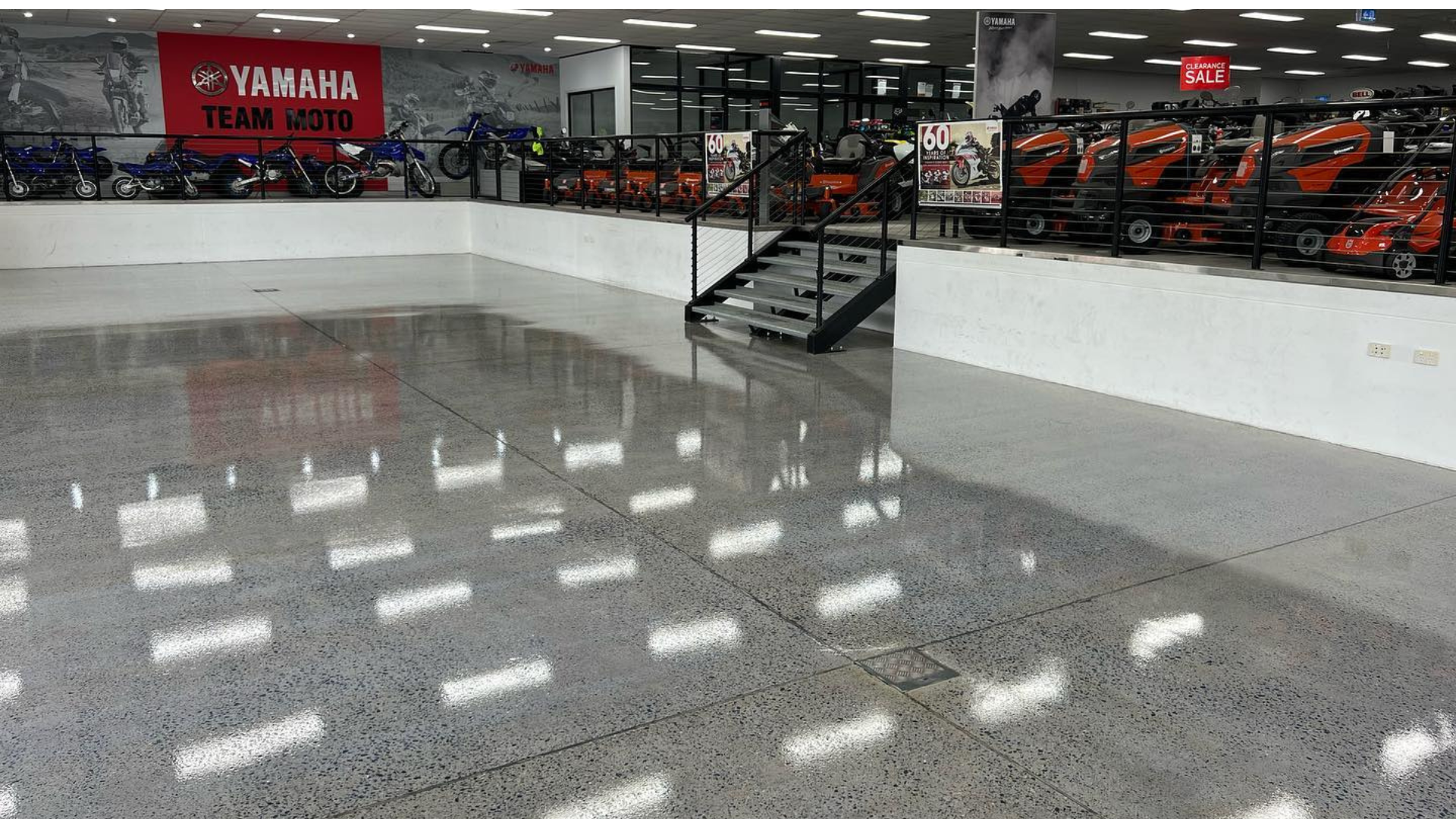
A honed concrete finish typically sits at the lower-sheen end of the scale. A matte finish creates a softer, more natural appearance, while satin finishes introduce a little more depth and reflection. Higher-sheen finishes tend to deepen colour and reflect more light.
If you're looking for a mirror-like, high-gloss result, that's generally the territory of our polished concrete systems rather than honed concrete.
Sealer Selection
The sealer does more than protect the floor. It also influences the final appearance of the concrete. Some sealers slightly enrich the look of the surface, while others maintain a more natural finish. We generally work with either water-based or polyurethane systems depending on the environment, and that choice affects both durability and the overall appearance of the floor. The sealer also plays an important role in slip resistance, which we cover in more detail in our
Is Honed Concrete Slippery? Slip Ratings and Non-Slip Options Explained.
Why Two Honed Floors Are Never Exactly the Same
The aggregate and cement within a slab were selected and placed when the concrete was originally poured, often years before any honing takes place. Concrete is a naturally variable material, so differences in aggregate, mix design, placement and age can all influence what is revealed during grinding.
Even slabs that appear similar before grinding can produce noticeably different results once honed. That's why colour references and samples should be treated as guides rather than exact representations of the final appearance.
New Slabs vs Existing Slabs: What Is Actually Controllable
Colour decisions get made at different stages depending on the build. On a new slab, the aggregate, stone blend and any coloured mix are chosen at the pour stage, usually between the builder and the concrete supplier, before any honing happens, and that is where colour charts and ready-mix genuinely come in. On an existing slab, that window has closed: the colour is already set, and honing brings it out.
How Lighting & Surroundings Shift the Colour You See
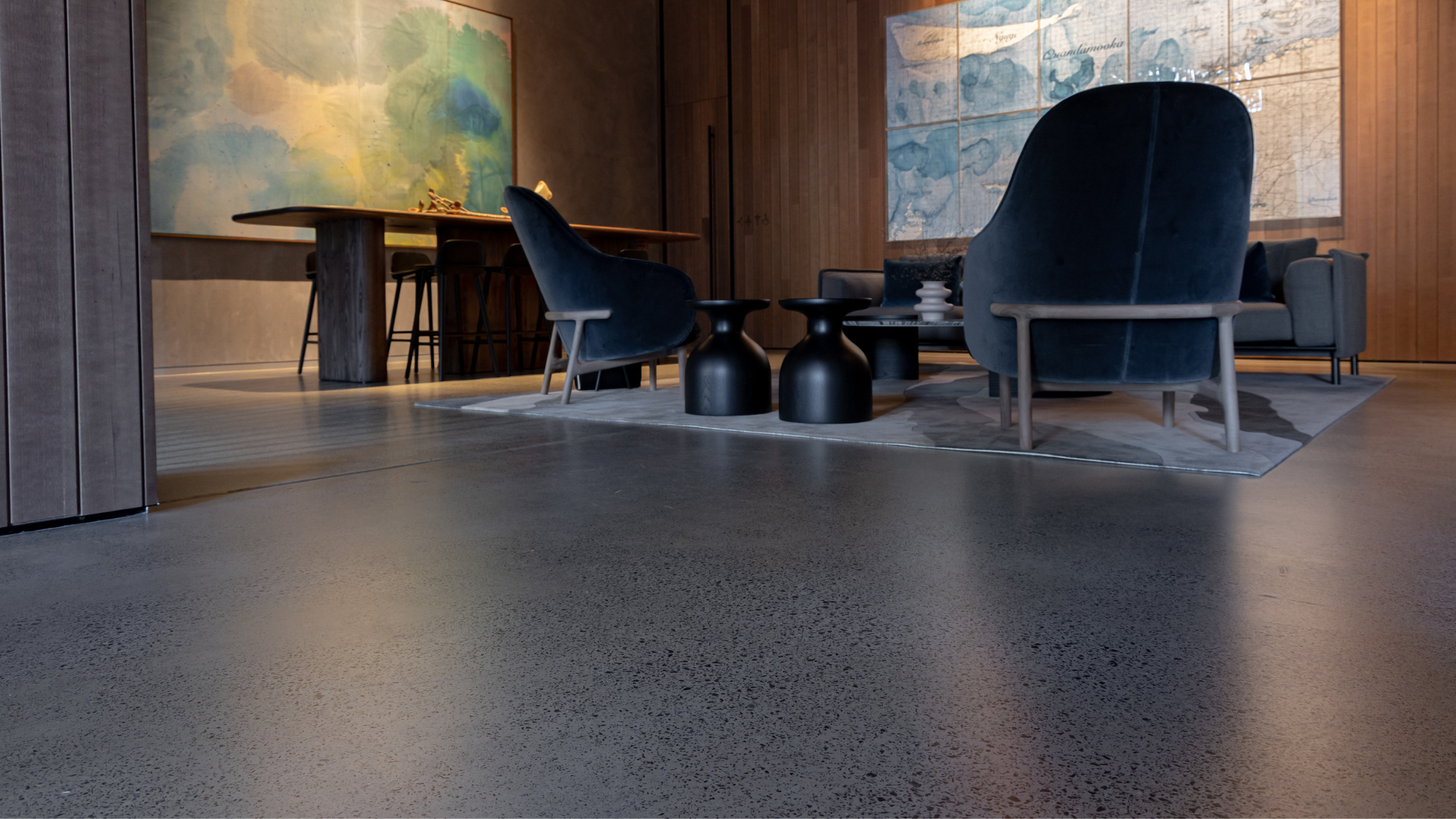
A matte honed surface reflects light differently to a glossy finish, so the same floor can look different depending on the time of day, lighting conditions and the materials around it.
Natural light, artificial lighting, wall colours and adjacent finishes such as timber or stone can all influence how a honed concrete floor is perceived.
It is worth viewing a sample on site at different times of day before making a final decision, as lighting conditions can significantly affect how a colour appears.
Conclusion
Honed concrete colours are shaped by the aggregate within the slab, the cement base, the level of stone exposure and the sealer applied at the end. Because these elements already exist within the concrete, the final appearance is revealed through the honing process rather than chosen from a colour chart.
No two slabs are exactly the same, which is why samples and reference photos should be treated as guides rather than guarantees. Understanding the slab you are working with is the key to setting realistic expectations and achieving the best possible result.
To see examples of the different honed concrete finishes we work with, please visit our website.
Key Takeaways
- The final appearance of a honed concrete floor is largely determined when the concrete is poured, through the aggregate, cement base and mix design used in the slab.
- Stone exposure (minimal stone, medium stone or full stone) has a major influence on the finished look, with greater exposure revealing more of the aggregate's colour and pattern.
- Aggregate size also affects the appearance of a honed floor, with larger stones creating a bolder look and smaller aggregates producing a more uniform finish.
- The finish and sealer influence the overall appearance of the floor, including its sheen and visual character.
- No two honed concrete floors are exactly the same because every slab contains different materials, placement methods and natural variation.
- Lighting conditions and surrounding materials can significantly influence how a honed concrete floor appears.
- On existing slabs, the honing process works with the concrete that's already there, revealing and enhancing its natural characteristics.
Frequently Asked Questions
Can you choose the colour of honed concrete?
To a degree. On an existing slab, the colour is largely determined by the aggregate and cement already within the concrete, and the honing process reveals those characteristics. On a new slab, the aggregate, cement base and any coloured mix are selected before the concrete is poured, which is when the biggest colour decisions are made.
What affects the final colour of honed concrete?
The final appearance is influenced by the aggregate within the slab, the cement base, the level of stone exposure and the sealer used to finish the floor. Because all of these factors work together, no two honed concrete floors look exactly the same.
What is stone exposure in honed concrete?
Stone exposure refers to how much aggregate is revealed during the honing process. Honed concrete is typically finished with minimal stone, medium stone or full stone exposure, each producing a different appearance and level of visible aggregate.
Does stone exposure change the appearance of a honed floor?
Yes. Minimal stone exposure displays more of the cement base, while medium and full stone exposure reveal increasing amounts of aggregate. The amount of exposure can significantly influence both the colour and pattern of the finished floor.
Why does my honed concrete look different to a photo or sample?
Concrete is a naturally variable material. Differences in aggregate, cement colour, placement methods and age can all influence the finished result. Samples and photos are useful guides, but they cannot exactly predict how every slab will look once honed.
Can two honed concrete floors ever look the same?
Not exactly. Even when two floors have similar specifications, natural variation within the concrete can produce different colours, patterns and levels of aggregate exposure.
Does the sealer affect the appearance of honed concrete?
Yes. The sealer can influence both the sheen and overall appearance of the floor. Some sealers enhance the natural characteristics of the concrete, while others maintain a flatter, more natural finish.
What finish can you achieve with honed concrete?
A honed concrete finish typically sits at the lower-sheen end of the scale, ranging from matte to satin. If a mirror-like, high-gloss finish is required, polished concrete is generally the more suitable option.
Does a honed concrete floor change appearance over time?
Yes. While the aggregate and cement within the slab remain the same, everyday wear, cleaning practices and traffic can influence how the floor looks over time. Regular maintenance and resealing help protect the finish and preserve the appearance of the concrete. We cover this in more detail in our How to Maintain and Reseal Honed Concrete Floors.
Can lighting change the way honed concrete looks?
Yes. Natural light, artificial lighting and the materials surrounding the floor can all influence how a colour is perceived. It is worth viewing a sample on site at different times of day before making a final decision.
What is the difference between honed concrete and polished concrete finishes?
Honed concrete typically has a matte to satin finish and is often used where a lower-sheen appearance is preferred. Polished concrete is processed further to create a higher-gloss finish with greater reflectivity. Our guide to honed vs polished concrete covers the differences in full.
Is there a most popular honed concrete colour?
There is no single most popular honed concrete colour. The final appearance depends on the existing concrete slab, including the aggregate, cement base and level of stone exposure. Most projects are designed around the characteristics of the slab rather than selecting a colour from a standard range.

Ready to Take Your Polished Concrete Floor Project to the Next Level?
We’ll help you choose the right system and finish for your space without compromising on results.
Trusted by builders, project teams, and businesses
As polished concrete contractors in Brisbane, we’re relied on by professionals who need dependable scheduling, consistent quality, and clear communication. Every job is completed by our own experienced team, so you deal directly with us from start to finish.