The Complete Guide to Honed Concrete Floors
Honed concrete is one of the most specified floor finishes in residential, commercial, and industrial construction across Australia. It produces a smooth, sealed surface with a consistent sheen, works on new and existing slabs, and comes in a range of stone exposure levels and gloss options to suit almost any environment. But knowing which system is right for a given space, which sealer to specify, and what to realistically expect from the finish takes more than looking at a project photo.
With over 15 years of experience completing honed concrete floors across residential, commercial, and industrial spaces, the team at Allure Concrete Solutions has seen what separates a finish that lasts from one that doesn't. As authorised applicators of Ashford Formula, RetroPlate and HYCHEM, they have delivered polished and sealed floors for builders, architects, and project managers who need a dependable result. This guide covers what is worth knowing before committing to a specification: the process, stone exposure options, sealer types, slip ratings, maintenance intervals, and the practical limitations of this finish.
Quick Answer: What Is Honed Concrete?

Honed concrete is a mechanically ground and sealed concrete finish that produces a smooth, low- sheen surface with varying levels of aggregate exposure. The concrete is progressively ground using diamond abrasive tooling, surface voids are filled with a polymer-based grout, and a topical sealer is applied to achieve the desired sheen level: matte, satin, or gloss. Additionally nonslip additives can be added to create greater slip ratings.
The key difference from mechanically polished concrete lies in the finishing method. A honed finish relies on a topical sealer applied over the ground surface to create the shine, while polished concrete
achieves its shine by progressively using different grit resins, and chemical hardeners. Both are durable, long-lasting finishes, but they suit different slab types, budgets, and maintenance expectations. For a full breakdown of how polished concrete is specified and installed, the mechanical polished concrete service page covers the process in detail.
What the Honing Process Involves
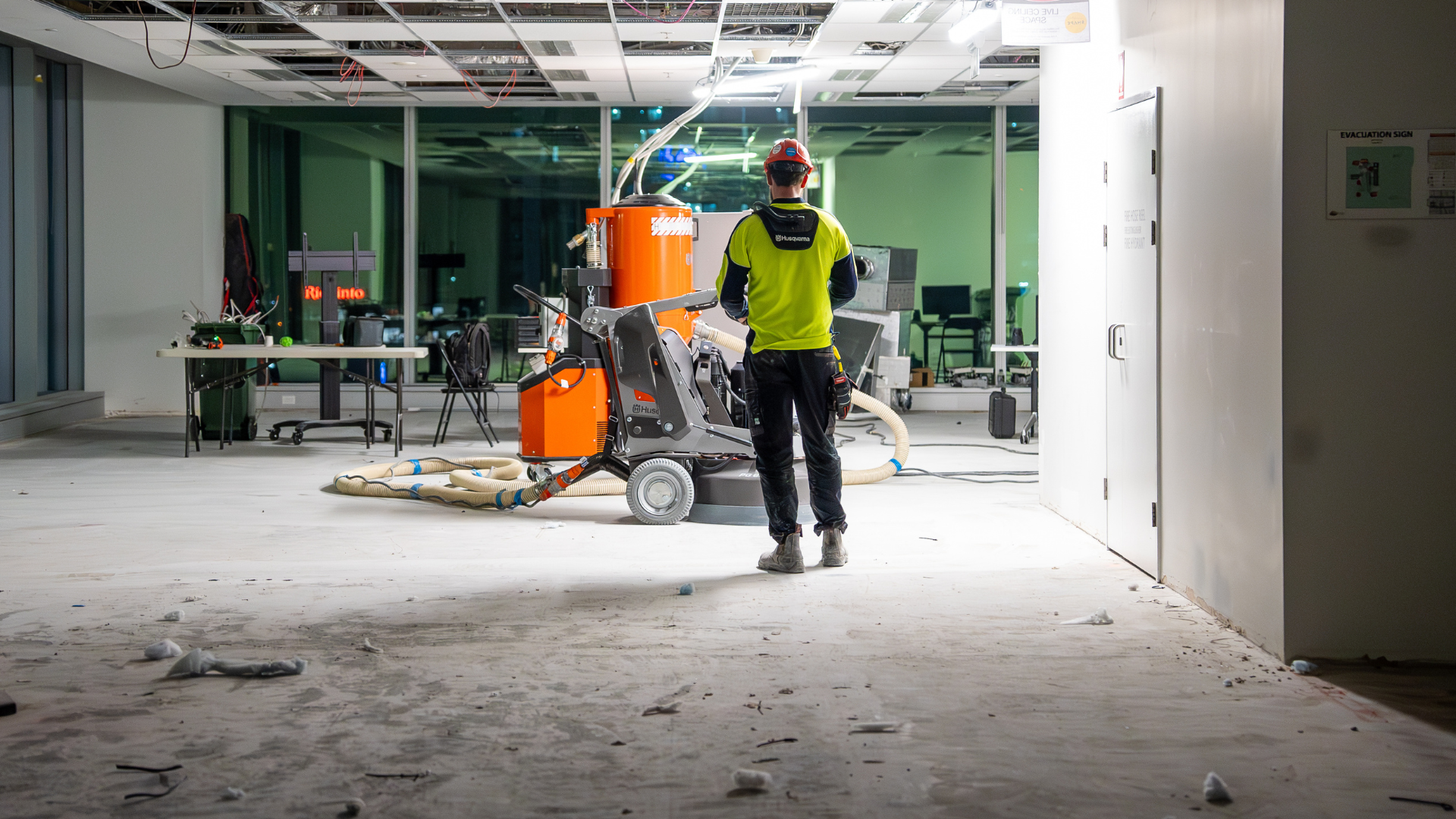
The concrete honing process moves through a series of progressively finer grinding passes, with each stage preparing the surface for the next. Surface preparation is critical: the slab's condition, moisture levels, and any existing coatings or contamination all affect what is achievable in the final finish. Work is completed using industrial H-class dust extraction to manage dust at the source and maintain a safe, compliant work area throughout grinding.
The process works on both new slabs and existing concrete, making it adaptable across new builds, renovations, and commercial refurbishments. The machinery, grit sequencing, grouting technique, and sealer selection are what deliver a consistent result. This is not a process that can be replicated with consumer-grade equipment, and the variability in outcomes between operators reflects that.
What Happens at Each Stage
The concrete honing process follows four core stages:
- Grind. The surface is levelled and smoothed using diamond abrasive tooling, starting with a coarser-grit diamond to remove imperfections and bring the slab to a consistent plane across the area.
- Expose. Diamond passes progress from coarse to fine to reveal the aggregate within the slab to the specified exposure level. Each additional pass deepens the exposure.
- Grout. Polymer-based grout is worked into the surface to fill holes and capillaries, tightening the texture and preparing the slab to receive the sealer evenly.
- Seal. A topical sealer is applied to achieve the requested sheen: matte, satin, or gloss. Sealer type is chosen based on the intended use of the space, traffic volume, and whether the surface is internal or external.
What is honed concrete? Process, finishes and stone exposure explained
Levels of Stone Exposure: What Are Your Options?
Understanding aggregate exposure levels is one of the first decisions when specifying a honed finish. The level of exposure affects the look, the cost, and the number of grinding passes required. It also depends heavily on the slab itself: the aggregate in the original concrete mix determines what will be revealed, and the final look cannot be guaranteed until grinding begins.
Here are the five common levels:
- Nil/Burnished. No aggregate exposed. The surface appears as a smooth, even grey with no stone visible. This is the minimum grind level and the basis for a burnished finish.
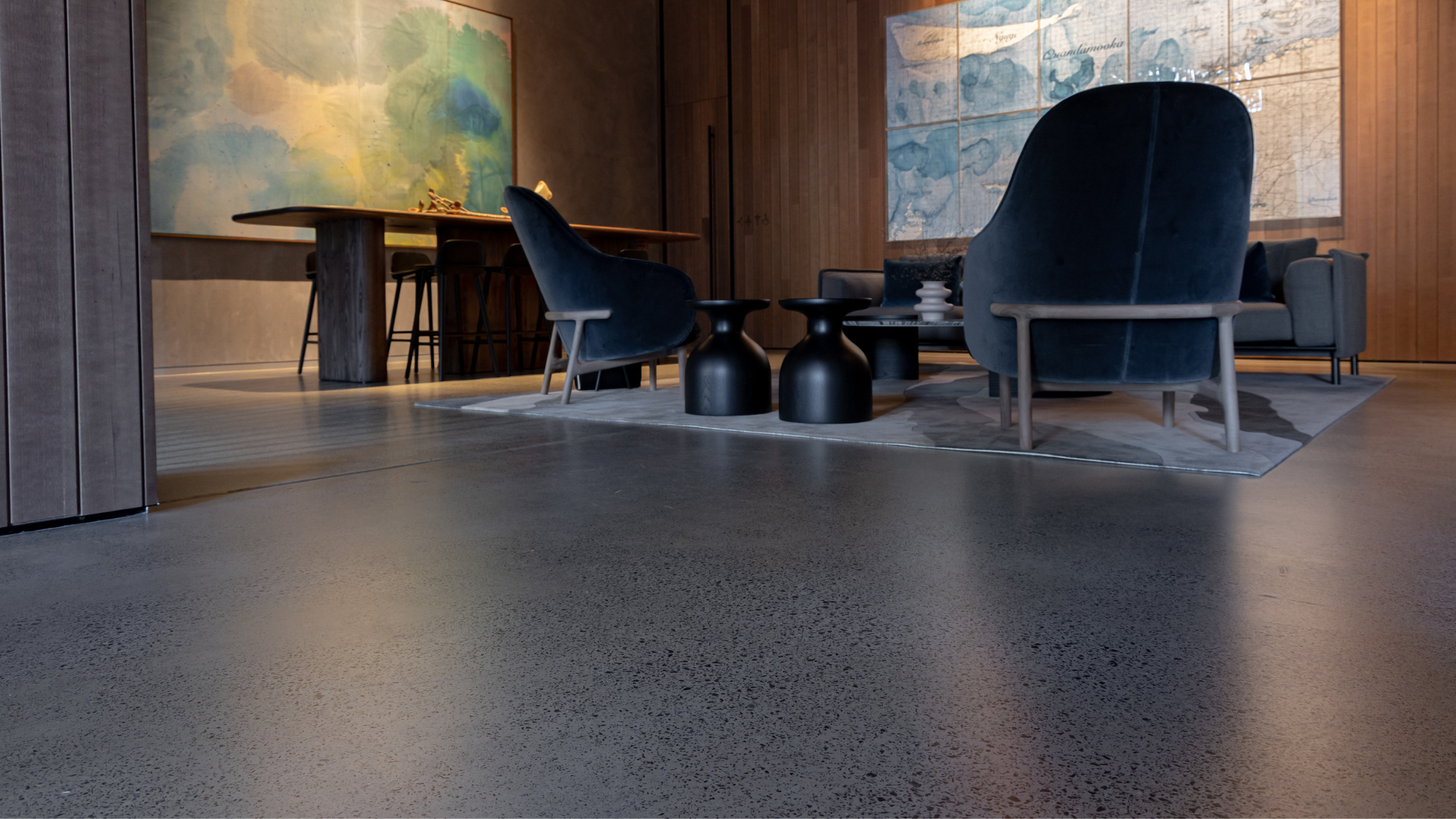
- Salt and pepper. Fine sand and small stones are just visible across the surface, creating a subtle, speckled appearance. Popular for residential applications where a clean, understated look is preferred.
- Random exposure. Occasional larger stones become visible, distributed unevenly across the slab. The look varies depending on the concrete mix and aggregate composition.
- Medium exposure. Achieved with one grinding pass, revealing a range of stone sizes with varied distribution across the surface.
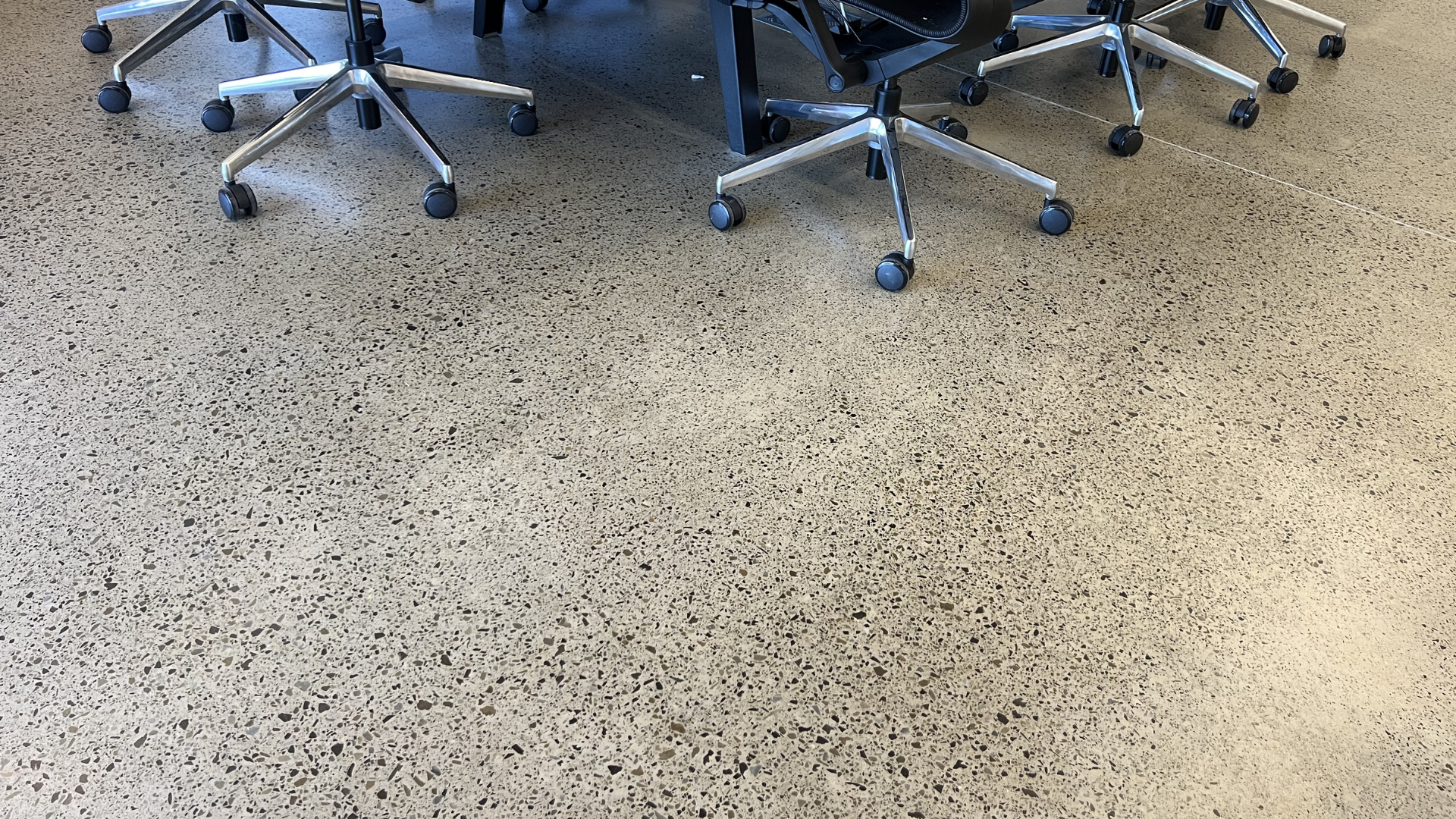
- Full exposure. Multiple grinding passes reveal the aggregate consistently across the entire slab. For new slabs targeting full exposure, a green cut approximately three weeks after the concrete pour is recommended to set the foundation for the final result.
Honed concrete colours and finishes: what affects the final look
Sealer Options for Honed Concrete Floors
Sealer selection determines the sheen level, durability, and maintenance interval of a honed concrete flooring installation. For interior use, two main categories apply: water-based sealers (lower VOC, suited to residential and light commercial spaces) and polyurethane (PU) sealers (thicker film, better suited to high-traffic commercial environments like showrooms and retail floors). Both are topical sealers that sit as a film on the surface, wear back with use over time, and can be sanded back and re-applied without touching the concrete beneath.
For external applications, including pool surrounds, patios, and driveways, penetrating sealers are absorbed into the substrate rather than sitting on top. UV stability and slip compliance take priority over sheen level in these environments. The right sealer for any project depends on how the space will be used, foot traffic volume, and whether the surface is internal or external.
Water-Based vs Polyurethane Sealers: Which Is Right for Your Project?
| Feature | Water-Based Sealer | Polyurethane (PU) Sealer |
|---|---|---|
| Best suited to | Residential, light commercial | High-traffic, commercial |
| Sheen options | Matte, satin, gloss | Satin, gloss |
| Durability | Good | High |
| VOC levels | Low | Moderate |
| Resealing frequency | Every 4-5 years (light residential) | Review every 3-4 years (heavy commercial) |
Is Honed Concrete Slippery? Understanding Slip Ratings
Sealer selection determines the sheen level, durability, and maintenance interval of a honed concrete flooring installation. For interior use, two main categories apply: water-based sealers (lower VOC, suited to residential and light commercial spaces) and polyurethane (PU) sealers (thicker film, better suited to high-traffic commercial environments like showrooms and retail floors). Both are topical sealers that sit as a film on the surface, wear back with use over time, and can be sanded back and re-applied without touching the concrete beneath.
Is honed concrete slippery? Slip ratings and non-slip options explained
Honed Concrete vs Polished Concrete vs Burnished Concrete
Many clients arrive at this specification having also been quoted on polished or burnished finishes. The differences are practical, not just visual. Honed uses a topical sealer for its sheen with stone exposure adjustable from nil to full aggregate, suits a broad range of residential and commercial applications, and is more accessible in cost than polished.
Polished concrete (mechanical) works hardeners into the substrate using resin pads, building gloss from within the slab without a topical film coat. The result is a longer maintenance lifespan before resurfacing is required, though at a typically higher cost. The mechanical polished concrete service page covers how this finish is delivered, and our polished concrete blog post goes into more detail on where it performs best.
Burnished concrete mechanically refines the surface without exposing aggregate, reducing dusting and improving everyday wear. It suits industrial environments where a functional, dust-free surface matters more than aesthetics. The burnished concrete service page covers this finish in full, and ACS recommends across all three based on slab condition, intended use, and client preference at the assessment stage.
| Feature | Honed | Polished (Mechanical) | Burnished |
|---|---|---|---|
| Sealer type | Topical (water-based or PU) | None: hardener into slab | None/densifier |
| Aggregate exposure | Nil to full | Salt and pepper to full | Nil |
| Gloss level | Matte to gloss | Satin to high gloss | Low sheen to satin |
| Maintenance interval | 4-5 years (light residential) | Longer before maintenance | Periodic review |
| Typical use | Residential, commercial | Commercial, premium residential | Industrial, warehouse |
| Relative cost | Moderate | Higher | Moderate |
Where Honed Concrete Floors Work Best
Honed concrete flooring performs across a broad range of environments when the right sealer and grit level are matched to the space. A minimum project size applies: ACS completes projects of 100m2 and above. Garage floors and projects under 100m2 are outside the scope of the service.
Here is how it performs across common environments:
- Internal residential: Living areas, hallways, and open-plan kitchens in new builds and renovations. Low to medium traffic, water-based or PU sealer, matte to satin finish typical. The surface complements contemporary interiors and modern architectural homes well.
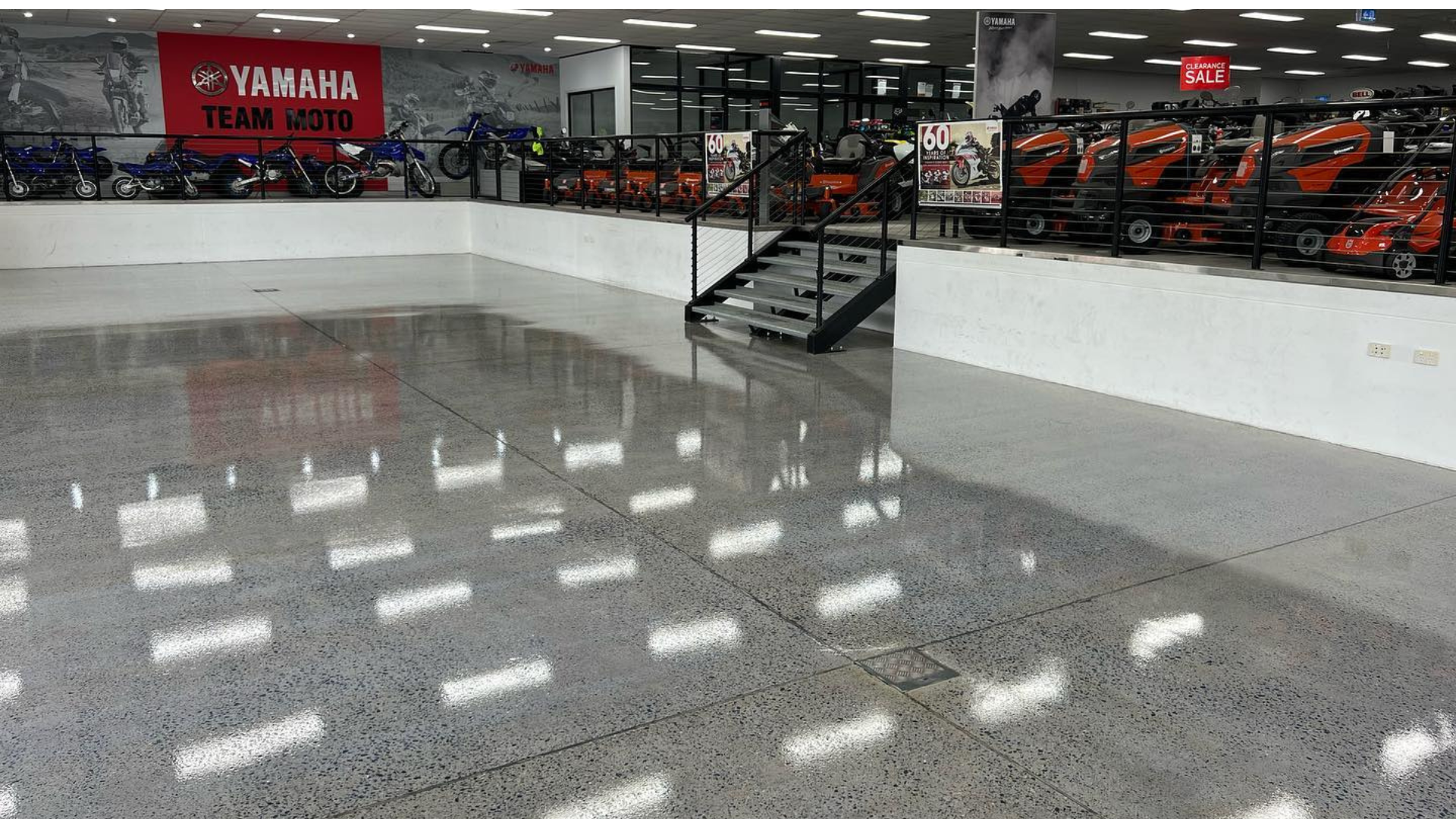
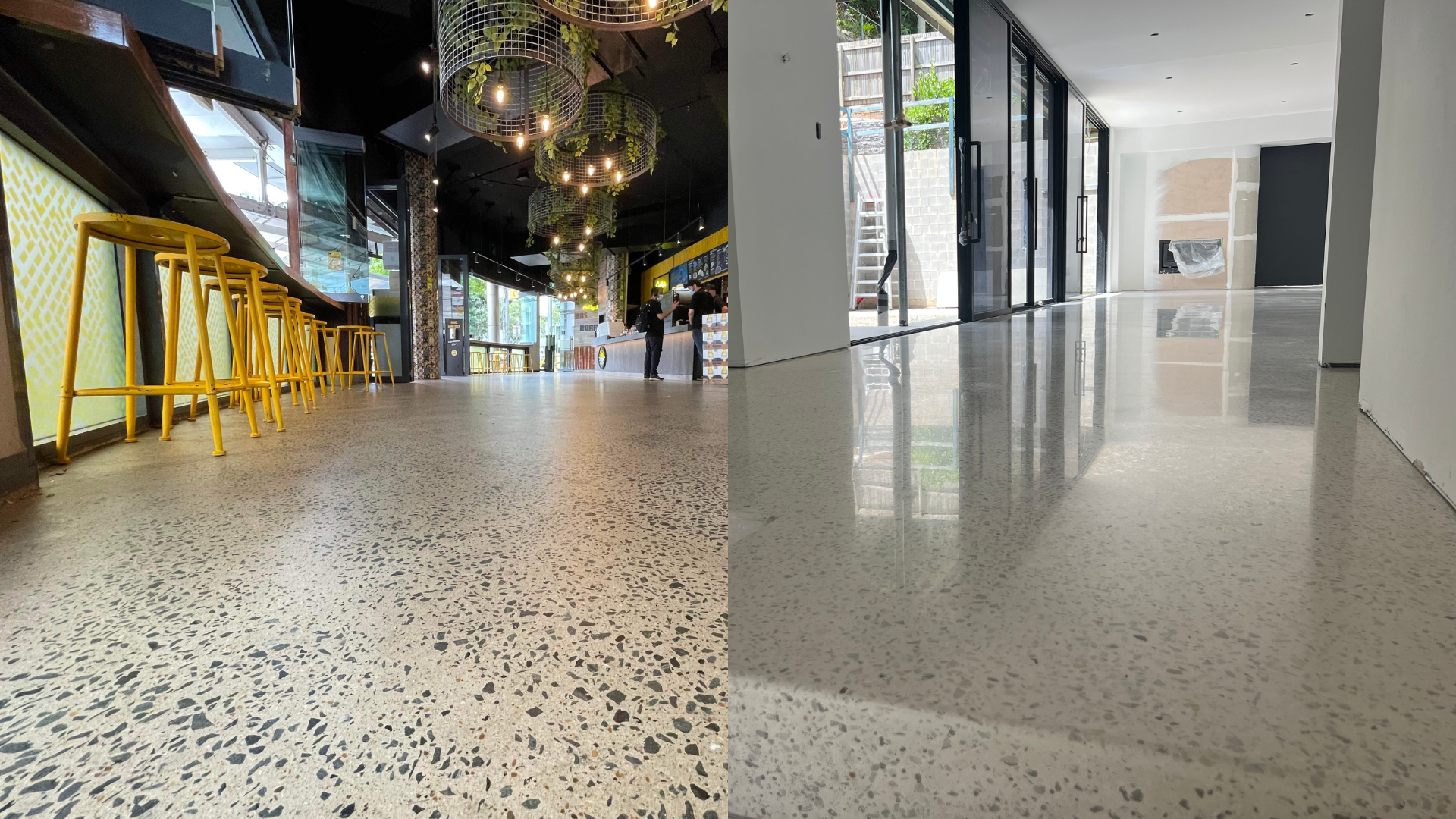
- Commercial offices and retail: Reception areas, showrooms, and café floors. Medium traffic, PU sealer, satin to gloss finish typical. It cleans easily and presents consistently across large floor areas.
- Industrial and warehouse: Honed with a lower grit and appropriate sealer system for dust suppression and surface hardness. Note that concrete cleaning and densification is a separate ACS service, using penetrating densifiers to strengthen the substrate and reduce surface dust. It is often specified alongside or instead of honing in industrial environments where surface function outweighs aesthetics.
- External: Patios, pool surrounds, driveways, and pedestrian paths. Penetrating sealer, lower grit finish, and slip compliance are all non-negotiable for outdoor use.
Honed concrete vs exposed aggregate: which suits your project?
How Long Does Honed Concrete Last? Maintenance and Resealing
A sealed honed floor lasts for decades. The concrete itself does not wear out; the sealer is what needs periodic attention. Day-to-day care is straightforward: sweep regularly, mop with a pH-neutral cleaner, and avoid harsh chemicals or solvents. Resealing is typically needed every four to five years for residential use, potentially sooner in high-traffic commercial environments, with signs including dull patches, water absorbing rather than beading, or an uneven sheen that cleaning does not restore.
A common mistake is waiting until the surface looks visibly deteriorated before acting. By that point, the concrete has been exposed to moisture and contaminants that make remediation more involved. Staying ahead of the resealing schedule is far more cost-effective. All clients receive a care guide at handover with maintenance recommendations specific to the sealer system installed.
How to maintain and reseal honed concrete floors
What to Consider Before Getting Honed Concrete
A few practical things worth clarifying before committing to a specification:
- Existing slab condition. Cracks, moisture, contamination, and previous coatings all affect the outcome of a honed finish. An on-site assessment is essential before any specification is finalised. What is achievable depends on the condition of the slab, not just what looks appealing in a project photo.
- Minimum area. ACS completes projects of 100m2 and above. Small residential jobs and garage floors are outside the scope of the service.
- New build timing. The ideal time is after framing and before skirting, cabinetry, or final painting. For full aggregate exposure on a new slab, a green cut approximately three weeks after the pour is recommended. Clear, uninterrupted site access is required throughout grinding and sealing.
- Site preparation. The full work area needs to be clear of furniture, building materials, and other trades. Skirting boards should be removed prior to arrival on existing builds.
- QBCC licensing and Home Warranty Insurance. ACS holds QBCC Licence 15230781, which means Home Warranty Insurance is available for eligible residential works. In a market with many unlicensed operators, this is a genuine consumer protection that unlicensed contractors cannot provide.
- What ACS does not do. ACS does not pour concrete slabs, complete garage floors, or complete projects under 100m2. Setting this clearly avoids wasted time on both sides.
To arrange an on-site assessment or discuss a project, reach out through the contact page.
How much does honed concrete cost? What drives the price
Conclusion
Honed concrete floors are a durable, low-maintenance option for residential, commercial, and industrial environments when specified correctly. The quality of the outcome depends on three things: the right specification for the environment, thorough surface preparation, and the correct sealer system for the intended use. Get those right, and the floor will perform for decades with modest maintenance.
If you are working on a project across South East Queensland and want a straight answer about whether honed concrete is right for your slab,
Allure Concrete Solutions offers on-site assessments across Brisbane, the Gold Coast, and the Sunshine Coast.
Key Takeaways
- Honed concrete is a mechanically ground and sealed finish. Its sheen comes from a topical sealer applied over the surface, which distinguishes it from polished concrete, where the gloss is built into the slab itself through hardener and resin pads.
- Aggregate exposure levels range from nil (smooth grey, no stone visible) through to full exposure (stone mix consistently revealed across the slab). The final look depends on the slab's original aggregate mix, not just the grinding specification.
- Sealer type determines sheen level, durability, and maintenance frequency. Water-based sealers suit lighter residential and indoor applications. Polyurethane sealers handle higher-traffic commercial environments.
- Slip compliance under the AS 4586 slip rating standard is critical for external and commercial applications. The right grit level and sealer system must be matched to the environment at the assessment stage, not selected on aesthetics alone.
- Topical sealers wear back over time and need reapplying: typically every four to five years for residential use under normal traffic. This is routine maintenance, not a product failure.
- An on-site slab assessment is essential before any specification is finalised. Slab condition, moisture levels, and original aggregate composition all affect what the final finish can realistically achieve.
Frequently Asked Questions
What is the difference between honed concrete and polished concrete?
This finish uses a topical sealer applied over the ground surface to create its sheen. Polished concrete works a hardener into the substrate using resin pads, building the gloss from within the slab without a film coat. Polished concrete has a longer maintenance lifespan before resurfacing is required and is generally more expensive. Honed offers more flexibility in sealer type and sheen level, suits a wider range of slab types, and is typically more accessible in cost.
Is honed concrete suitable for outdoor use?
Yes, when specified correctly. For external applications, a penetrating sealer and a lower grit finish are used to achieve the slip compliance required under AS 4586. Not all systems are suited to external conditions. Sealer selection and grit level must match the environment and the applicable slip rating, not just the visual outcome the client is after.
Is honed concrete slippery when wet?
It can be, particularly at higher gloss levels. Anti-slip additives, lower grit finishes, and penetrating sealers are the standard approaches for areas where wet conditions are likely. External, wet-area, and commercial environments with AS 4586 compliance requirements must be specified accordingly before installation.
How long does honed concrete last?
The concrete substrate can last for decades. The topical sealer will wear back over time and needs to be reapplied: typically every four to five years for residential use under normal traffic, potentially sooner for high-traffic commercial environments. Staying on top of the resealing schedule is the most cost-effective approach to maintaining the floor's appearance and performance.
Can honed concrete be done on an existing slab?
Yes. The concrete honing process works on both new and existing concrete. Existing slab condition, any applied coatings or contamination, and moisture levels are all assessed on-site before the specification is finalised. The outcome depends on the condition of the existing slab, which is why an assessment before quoting is essential.
What is aggregate exposure, and how do I choose a level?
Aggregate exposure refers to how much of the stone within the concrete is revealed during grinding, ranging from nil (smooth grey, no stone visible) through to full exposure, where the stone mix is consistently revealed across the slab. The right level depends on aesthetics, slab composition, and client preference. An on-site assessment helps confirm what is achievable from the existing slab before a specification is locked in.
How often does honed concrete need to be resealed?
Every four to five years for residential use under normal foot traffic. High-traffic or commercial environments may require a review sooner. Signs it is time include dull patches, water being absorbed rather than beading on the surface, or an uneven sheen that regular cleaning does not resolve.
What sealer type should I choose for honed concrete?
Water-based sealers suit lighter residential and indoor applications. Polyurethane sealers are more durable and better suited to higher-traffic or commercial environments. Penetrating sealers are recommended for external applications where UV stability and slip compliance are the priority. The right choice is determined by the space's intended use, traffic level, and whether the surface is internal or external.
Can honed concrete be done on small areas?
ACS completes projects of 100m2 and above. Small residential jobs and garage floors under 100m2 are outside the scope of services offered by ACS.
Does honed concrete scratch easily?
The sealed surface is susceptible to scratches from abrasive grit and dragged furniture. Regular sweeping and felt pads under furniture reduce this risk significantly. The sealer can be sanded back and refinished without replacing the concrete beneath.
Ready to Take Your Polished Concrete Floor Project to the Next Level?
We’ll help you choose the right system and finish for your space without compromising on results.
Trusted by builders, project teams, and businesses
As polished concrete contractors in Brisbane, we’re relied on by professionals who need dependable scheduling, consistent quality, and clear communication. Every job is completed by our own experienced team, so you deal directly with us from start to finish.