What Is Honed Concrete? Process, Finishes and Stone Exposure Explained
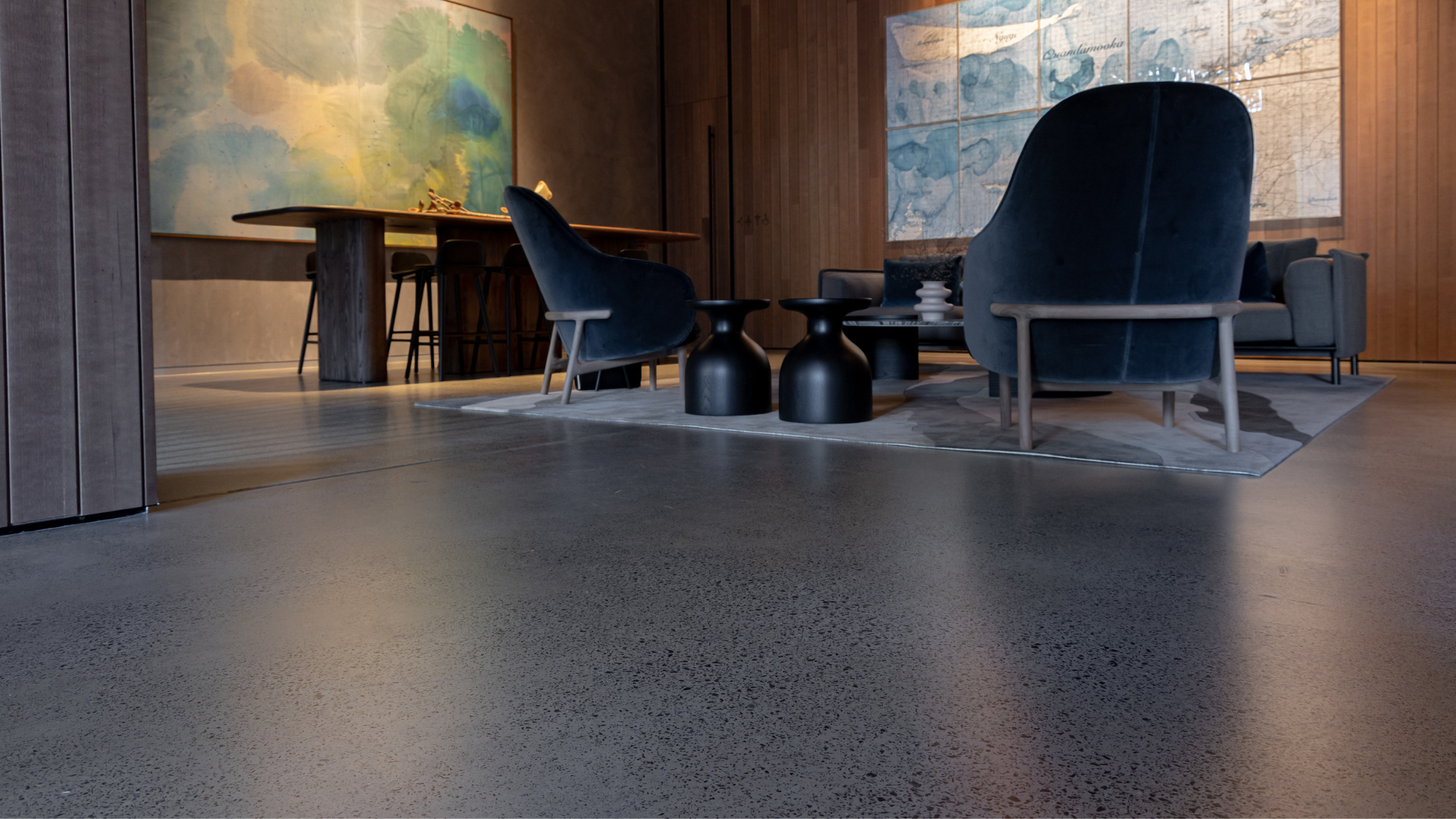
You have seen it in a project photo, been quoted by your builder, or had it specified on your architectural drawings. But what is honed concrete exactly, and how does it differ from other concrete finishes? It is a question we hear often, and it deserves a direct answer before any decisions are made.
Honed concrete is a mechanically refined surface, ground to a chosen depth, grouted, then sealed to achieve the desired finish and sheen. It sits between raw concrete and a fully polished finish in terms of gloss: polished concrete builds sheen from within through hardeners and resin pads, while honed relies on a topical sealer. Understanding what honed concrete is comes down to grind depth and sealer choice. This post walks through the full process, explains the different stone exposure levels, and covers what shapes the final result.
What Is Honed Concrete?
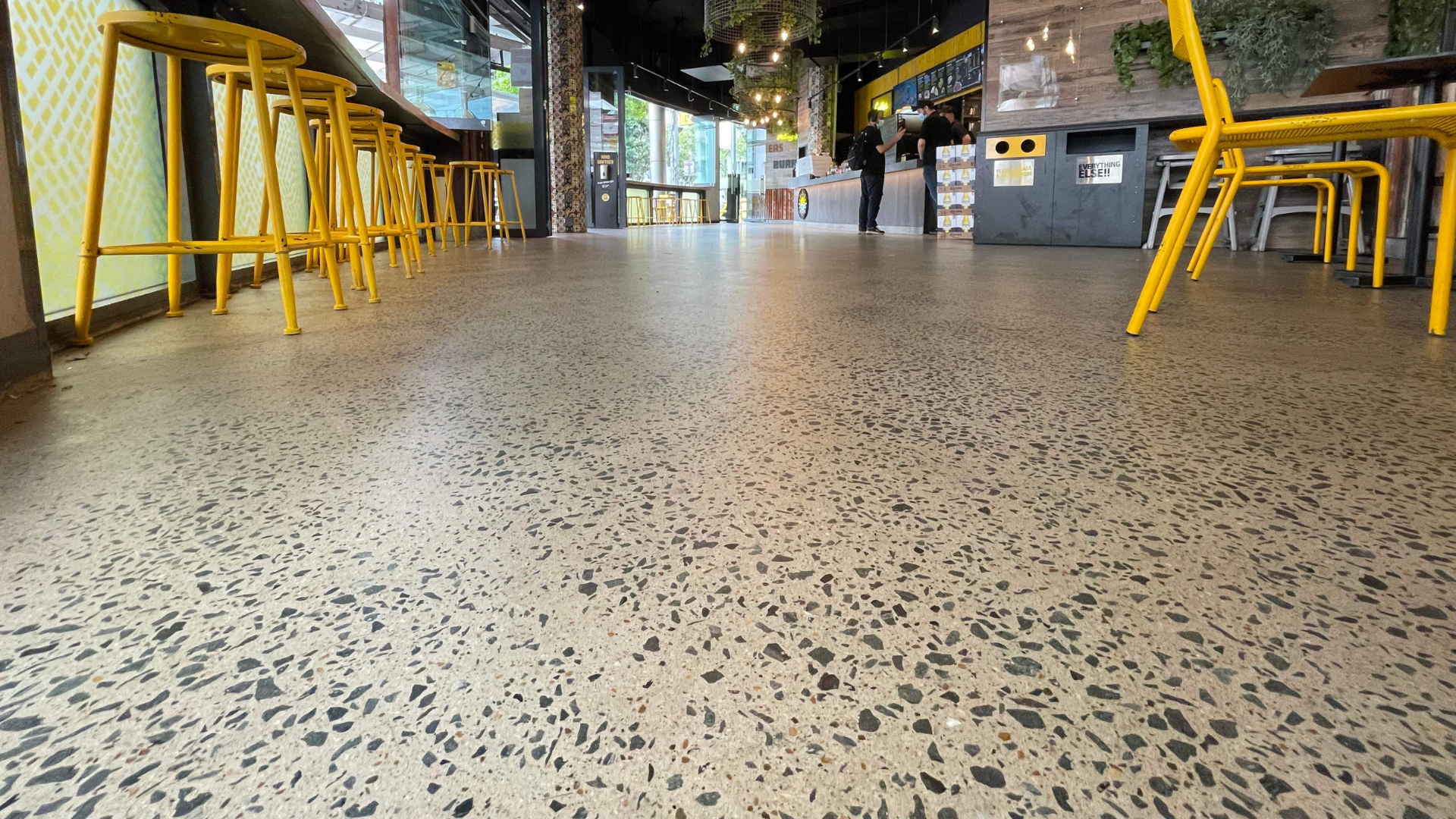
Honed concrete is achieved by mechanically grinding a cured slab with diamond tooling to a specified depth, exposing the aggregate to a chosen degree. Holes and capillaries are then filled with a polymer-based grout before a sealer is applied to achieve the final sheen level. The result is a smooth, refined surface with controlled aggregate visibility and a low-to-medium gloss, suited to commercial and larger residential applications.
The sheen level is determined by the sealer, not by further grinding, which also makes maintenance and recoating more straightforward over the life of the floor. Allure Concrete Solutions, a Brisbane-based concrete flooring specialist with over a decade of experience across South East Queensland, assesses every slab before specifying a system.
Learn more about the entire process here:
The complete guide to honed concrete floors
How the Honing Process Works
Honed concrete is not a surface treatment applied over the existing slab. It is a multi-stage mechanical process that starts with understanding the condition of the concrete and ends with the right sealer for the environment the floor will serve. Each stage builds on the previous one, and the quality of the final result depends on how well each step is executed.
Knowing what the process should look like helps clients identify the difference between a quality installation and one that will underperform. The grouting step is omitted by many providers. The sealer is chosen for appearance rather than performance. The sections below break down each stage.
Surface Preparation and Initial Assessment
Before any grinding begins, the slab is assessed for age, hardness, surface contamination, and any previous coatings or treatments, because slab condition determines which stone exposure levels are realistically achievable. A contaminated substrate, existing coatings, or significant hardness variation will each respond differently to grinding, and an accurate assessment prevents committing to a finish that the slab cannot deliver.
Cracks and surface defects are patched, surrounding areas are masked and protected, and the site is fully prepared before the grind begins. For new builds, ACS recommends scheduling honed concrete after framing is complete and before skirting, cabinetry, or final painting, with uninterrupted access to the full work area throughout.
Diamond Grinding
The grinding stage uses progressively finer grit diamond tooling, starting coarse to cut into the surface, then moving through finer grits to reach the target depth. Diamond grinding concrete to a shallower depth leaves the cement paste largely intact. Grinding deeper exposes more aggregate. Grind depth is how stone visibility is set, which is why this single decision shapes the entire look and texture of the finished floor.
H-class dust extraction equipment is used throughout the grinding stage to manage airborne particles, protect workers, and maintain a compliant work environment. Concrete grinding generates a significant volume of fine dust, and professional H-class extraction is the standard for any commercial or larger residential project.
Grouting and Surface Refinement
Holes and capillaries in the concrete are filled using a polymer grout concrete floor application to create a consistent base before sealing begins. This step is commonly skipped by less experienced operators, and without it, the sealer sits unevenly, the surface looks inconsistent, and the result falls well short of a refined finish.
Once the grout has cured, the surface is refined further with finer tooling and pads to prepare the floor for even sealer adhesion. This is what separates a genuine honed finish from a basic grind-and-seal approach.
Sealing
The sealer is applied across the fully prepared surface and determines the concrete honed finish in terms of sheen, protection, and long-term durability. The sealer system is specified before work begins, based on the environment, the traffic load the floor will carry, and whether a rated slip resistance is required.
Non-slip additives can be incorporated into the sealer at this stage for areas with specific slip rating requirements. Sheen options across both water-based and polyurethane systems include matte, satin, and gloss. The sealer type decision is covered in full in the honed concrete finish Options section below.
Stone Exposure Levels Explained
Stone exposure refers to how much aggregate is visible in the finished surface, and is one of the least clearly explained aspects of concrete stone exposure levels. It is controlled entirely by grind depth, and getting it right requires an honest assessment of what the slab can realistically deliver, not just what the client has seen in a project photo.
ACS uses three main exposure levels, labelled consistently across all project documentation. Competitor specifications often use different terminology, so where relevant, those alternative terms are noted below for easy cross-reference.
- None (no stone exposure): The cement paste remains largely intact, producing a smooth, consistent surface with minimal aggregate visible. Also referred to as "nil exposure" in some specifications. Suits minimalist interiors, commercial office spaces, and environments where a clean, seamless look is the primary goal.
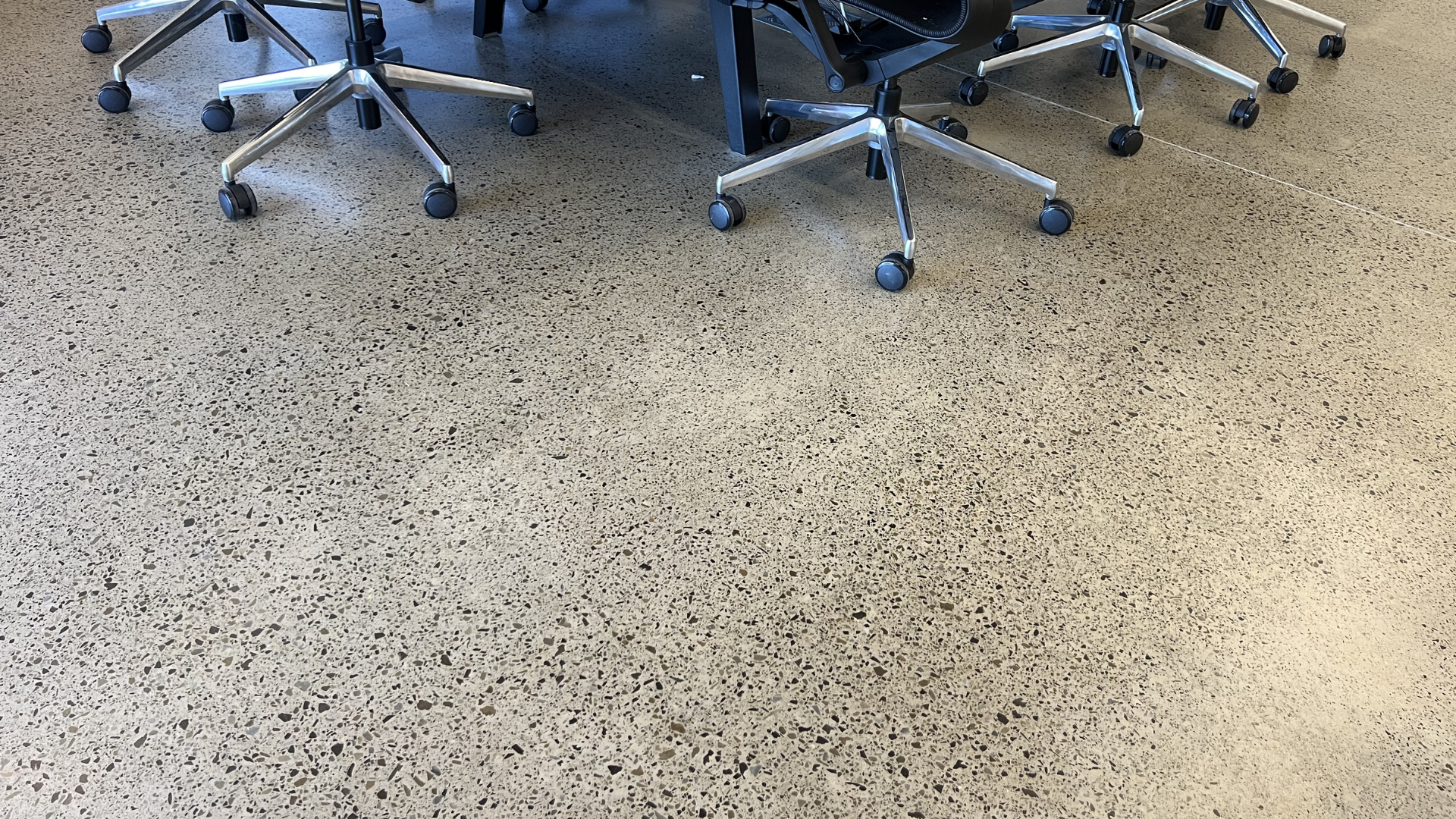
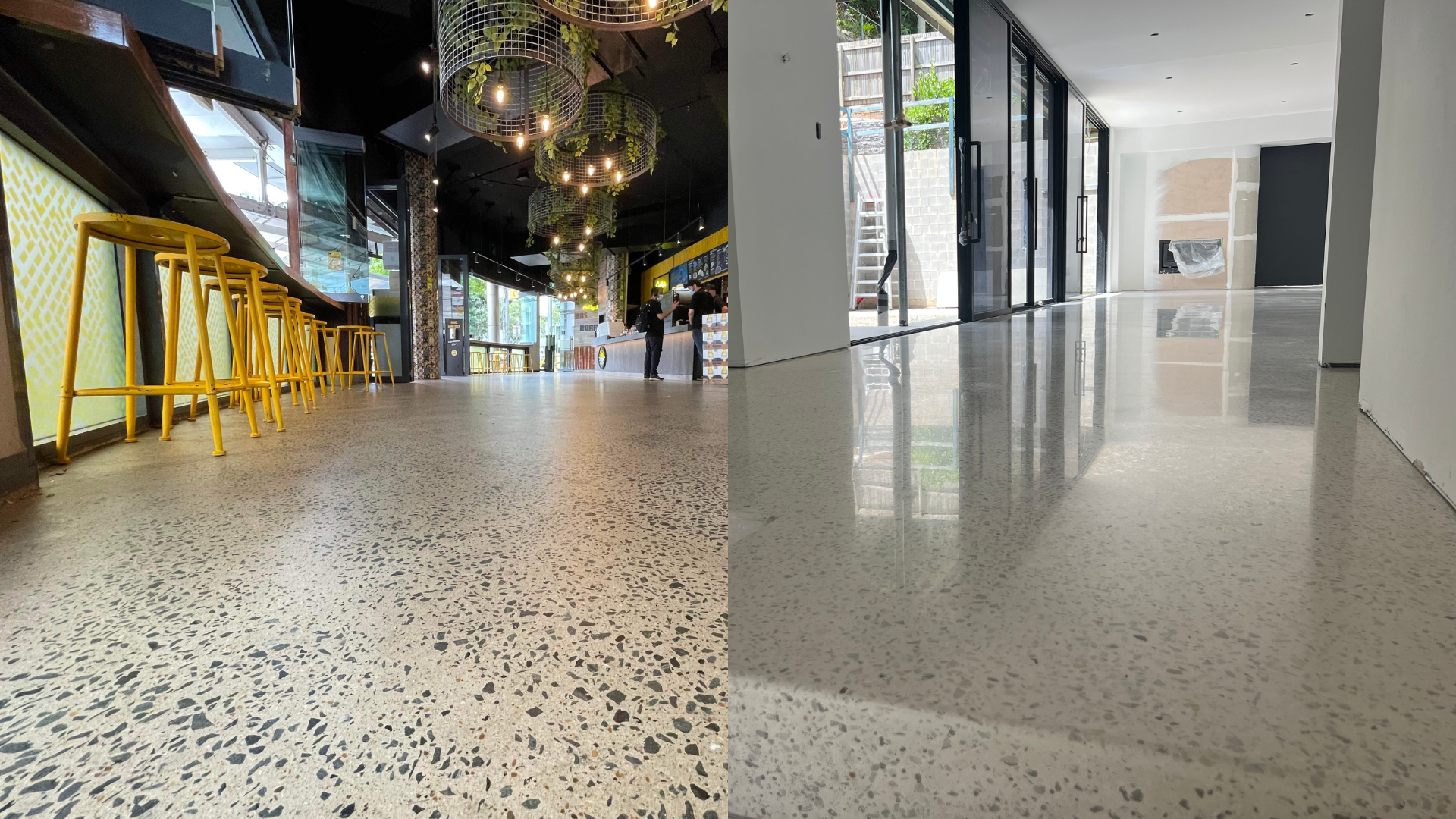
- Medium stone: The grind goes deeper, revealing a moderate scatter of aggregate across the surface. Adds natural texture and visual character without being visually dominant. Sometimes called "light exposure." Popular for residential living areas, hospitality venues, and commercial office floors.
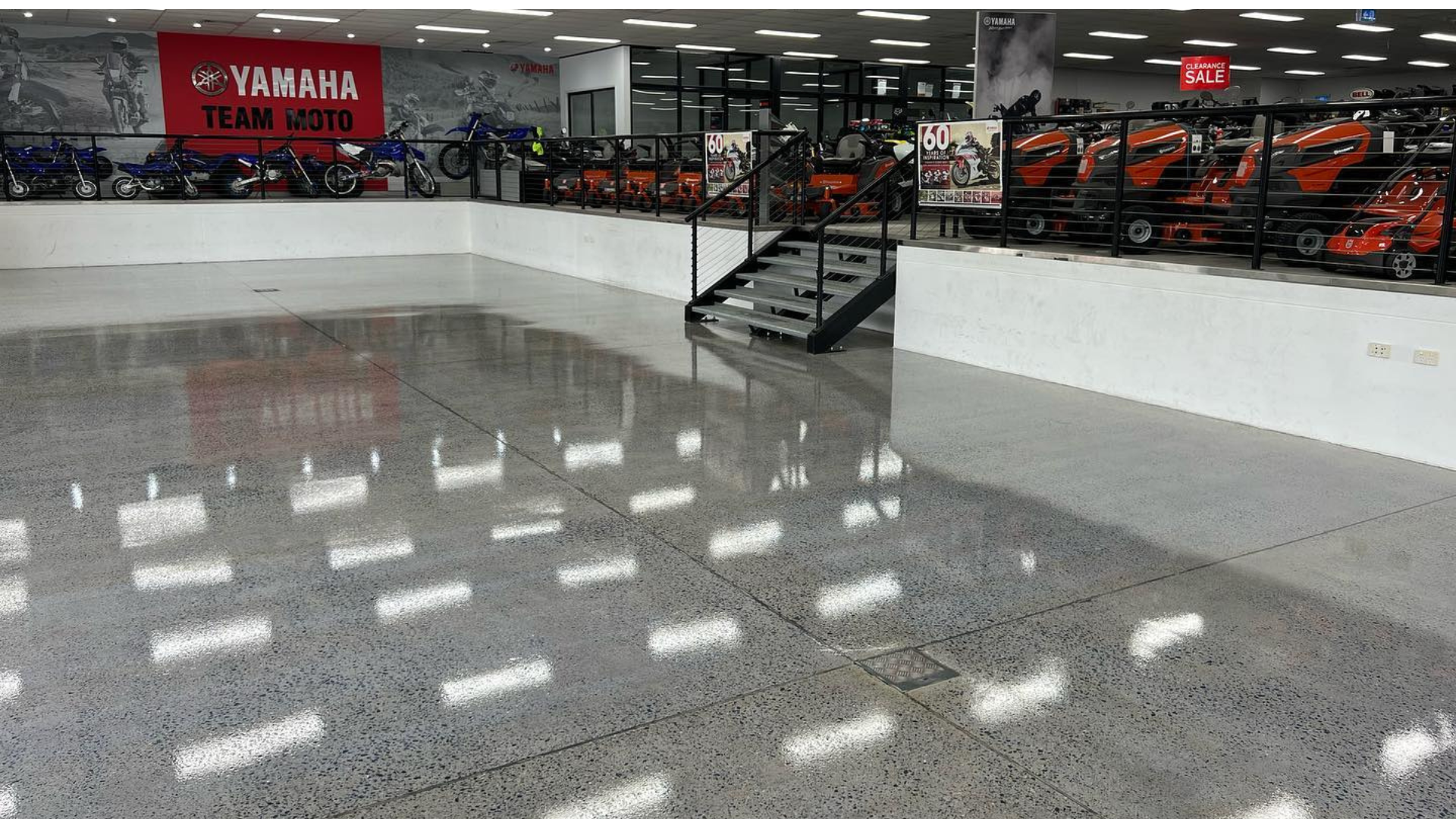
- Full stone: Maximum grind depth. The aggregate is prominently visible across the full surface, producing a strong natural stone character. Also referred to as "full exposure." Common in warehouses, showrooms, and projects where a bold, industrial look is specified.
| Exposure Level | What It Looks Like | Slip Resistance | Best Suited For | Maintenance Notes |
|---|---|---|---|---|
| None | Smooth, cement paste dominant | Lower (sealer is the primary surface) | Minimalist interiors, offices | Reseal every 4-5 years |
| Medium stone | Moderate aggregate scatter, natural texture | Moderate | Living areas, hospitality, retail | Reseal every 4-5 years |
| Full stone | Bold, prominent aggregate throughout | Higher (natural texture adds grip) | Showrooms, warehouses, industrial | Reseal every 4-5 years, traffic-dependent |
Honed Concrete Finish Options: Sheen and Sealer Choice
The sheen level of a honed concrete finish is determined entirely by the sealer, not by how far the slab is ground. Two honed floors with the same grind depth can look completely different simply because different sealers were specified. Water-based sealers produce a softer, more natural sheen and are easier to recoat without full sanding, suited to residential and lower-traffic commercial spaces. Polyurethane sealers produce a harder, more durable film with a higher sheen, suited to commercial and industrial environments with heavier use and longer recoat intervals.
Honed concrete slip resistance can be specified by incorporating a non-slip additive into the sealer at application, covering commercial kitchens, pool surrounds, and public walkways. Choosing water-based sealer vs polyurethane sealer is not a matter of preference but of matching the system to the actual demands of the space.
Where Honed Concrete Works Best
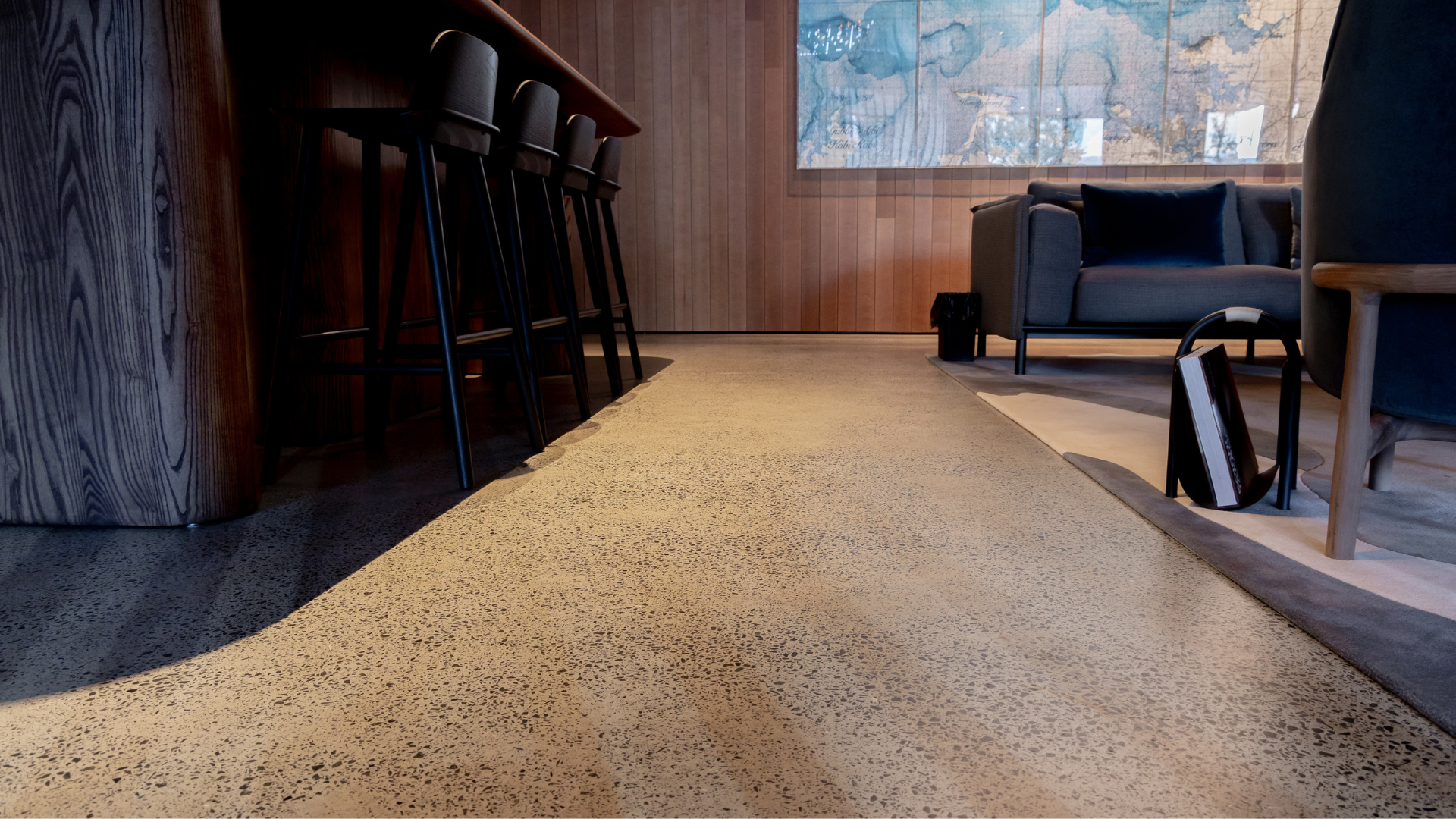
Honed concrete is a versatile finish that performs well across a range of environments, provided the stone exposure level and sealer system are matched to what the space actually demands. The finish is not a one-size-fits-all specification. The right outcome comes from aligning the grind depth, sealer type, and any non-slip requirement to how the floor will be used, not from choosing based on a photo. Indoor and outdoor applications each carry their own requirements:
- Commercial offices and reception spaces: Medium stone with a water-based satin system is a common specification. Low maintenance, professional appearance, and simple recoating.
- Retail showrooms and hospitality venues: Full stone or medium stone with a PU sealer for durability and visual impact under sustained foot traffic.
- Residential living areas: None or medium stone with a water-based sealer is typical. Clean aesthetic, comfort underfoot, and manageable long-term maintenance.
- Warehouses, back-of-house, and service areas: Full stone with a PU sealer for grip, durability, and resistance to the demands of the environment.
- Covered alfresco and pool surrounds (as part of larger commercial or residential projects): Appropriate sealer and non-slip specification for the conditions. Queensland's humidity, UV exposure, and wet seasons shorten recoat intervals for external surfaces compared to internal applications.
ACS does not complete projects under 100m2. This is a commercial and larger residential service. For details on applications and what to expect on your project, the ACS honed concrete service page covers the full scope of what is available.
Conclusion
Honed concrete is a durable, versatile, and visually refined finish. The result depends on three things done well: the grind depth that sets the aggregate exposure, the grouting quality that creates a consistent base for sealing, and the right sealer system for how the space will actually be used. Get those three right and the floor delivers exactly what was specified.
If you are thinking about honed concrete for a commercial or larger residential project,
Allure Concrete Solutions can assess your slab on-site and recommend the right system for the space.
Key Takeaways
- Honed concrete is a mechanically ground, grouted, and sealed finish with controlled aggregate exposure and a low-to-medium sheen, differing from polished concrete in both method and outcome.
- Stone exposure level (none, medium stone, or full stone) is controlled by grind depth and affects both aesthetics and natural slip resistance.
- The sealer type (water-based or polyurethane) determines the final sheen and recoat interval, and should be chosen based on intended use, not appearance.
- Existing slab condition determines what exposure level is achievable, making a site assessment essential before any finish is specified.
- Honed concrete suits indoor and outdoor applications when the sealer system and non-slip specification are matched to the environment.
- ACS completes projects of 100m2 and above. Garages, small patios, driveways, and projects below 100m2 fall outside the scope.
Frequently Asked Questions About Honed Concrete
What is the difference between honed concrete and polished concrete?
Honed concrete stops at an earlier grinding stage and relies on a topical sealer to achieve the final sheen. Polished concrete continues with chemical hardeners and progressively finer resin pads to produce a high gloss from within the surface, with no topical sealer film. Honed finishes are generally more straightforward to maintain and recoat. For more details on polished concrete, see Why Choose Polished Concrete. [Future cluster post: "Honed vs polished concrete: what is the difference?" - link when live].
Can honed concrete be applied to an existing slab?
Yes. ACS assesses the existing slab on-site before recommending a system, as slab age, hardness, contamination, and previous coatings all affect what is achievable. A contaminated slab or one with existing coatings will require additional preparation and may limit the achievable stone exposure level. No two slabs respond identically, which is why an on-site assessment is standard before any specification is confirmed.
Is honed concrete slippery?
It can be, particularly when wet. A surface with no stone exposure is smoother underfoot, while full stone exposure provides more natural texture and grip from the aggregate. Non-slip additives can be incorporated into the sealer at application to achieve a rated slip resistance for internal or external surfaces, including pool surrounds, commercial kitchens, and public walkways.
How long does a honed concrete floor last?
The concrete substrate can last for decades. The topical sealer requires a maintenance recoat every four to five years, though high-traffic commercial spaces and external surfaces in Queensland, where UV exposure and humidity are factors, will need attention sooner. ACS provides a care guide at handover covering cleaning routines and resealing intervals.
What is the difference between a water-based sealer and a polyurethane sealer for honed concrete?
Water-based sealers produce a softer sheen and are easier to recoat, suiting residential and lower-traffic commercial environments. Polyurethane sealers produce a harder, more durable film with a higher sheen, tolerating heavier traffic and longer recoat intervals, though preparation between coats is more involved. ACS specifies based on how the floor will be used, not aesthetic preference.
What stone exposure levels are available for honed concrete?
ACS works with three main levels: none (no stone visible, cement paste dominant), medium stone (moderate aggregate reveal with natural texture), and full stone (bold aggregate character across the full surface). These are sometimes referred to in competitor specifications as nil, light, and full exposure. The right level depends on the aesthetic goal, slab characteristics, and intended use, with a site assessment confirming what is realistic.
Does honed concrete need to be resealed?
Yes. The sealer wears over time and requires a maintenance recoat every four to five years, sooner for high-traffic or external surfaces. Without periodic resealing, the surface becomes susceptible to staining, moisture penetration, and accelerated wear. ACS provides a care guide at handover covering cleaning and resealing intervals.
What is the minimum project size for honed concrete with ACS?
ACS completes projects of 100m2 and above, across both commercial and residential work. Garages, small residential jobs, standalone driveways, and small patios fall outside the scope. The minimum applies consistently across all finish types, including polished concrete, epoxy coatings, and floor levelling.
Can a non-slip additive be added to honed concrete?
Yes. A non-slip additive can be incorporated into the sealer at application to achieve the required slip resistance rating for commercial kitchens, pool surrounds, public walkways, and covered alfresco areas as part of larger projects. It is specified from the outset as part of the sealer system, not retrofitted after installation.
How do I know what finish will suit my project?
An on-site assessment is the most reliable way to determine what a specific slab can achieve and which system best suits the space. ACS visits the site, assesses the concrete, and recommends the right system based on traffic, use, and the client's finish goals. No specification is finalised remotely, and the ACS honed concrete service page covers the full range of options.
Ready to Take Your Polished Concrete Floor Project to the Next Level?
We’ll help you choose the right system and finish for your space without compromising on results.
Trusted by builders, project teams, and businesses
As polished concrete contractors in Brisbane, we’re relied on by professionals who need dependable scheduling, consistent quality, and clear communication. Every job is completed by our own experienced team, so you deal directly with us from start to finish.