Honed vs Polished Concrete: What Is the Difference?
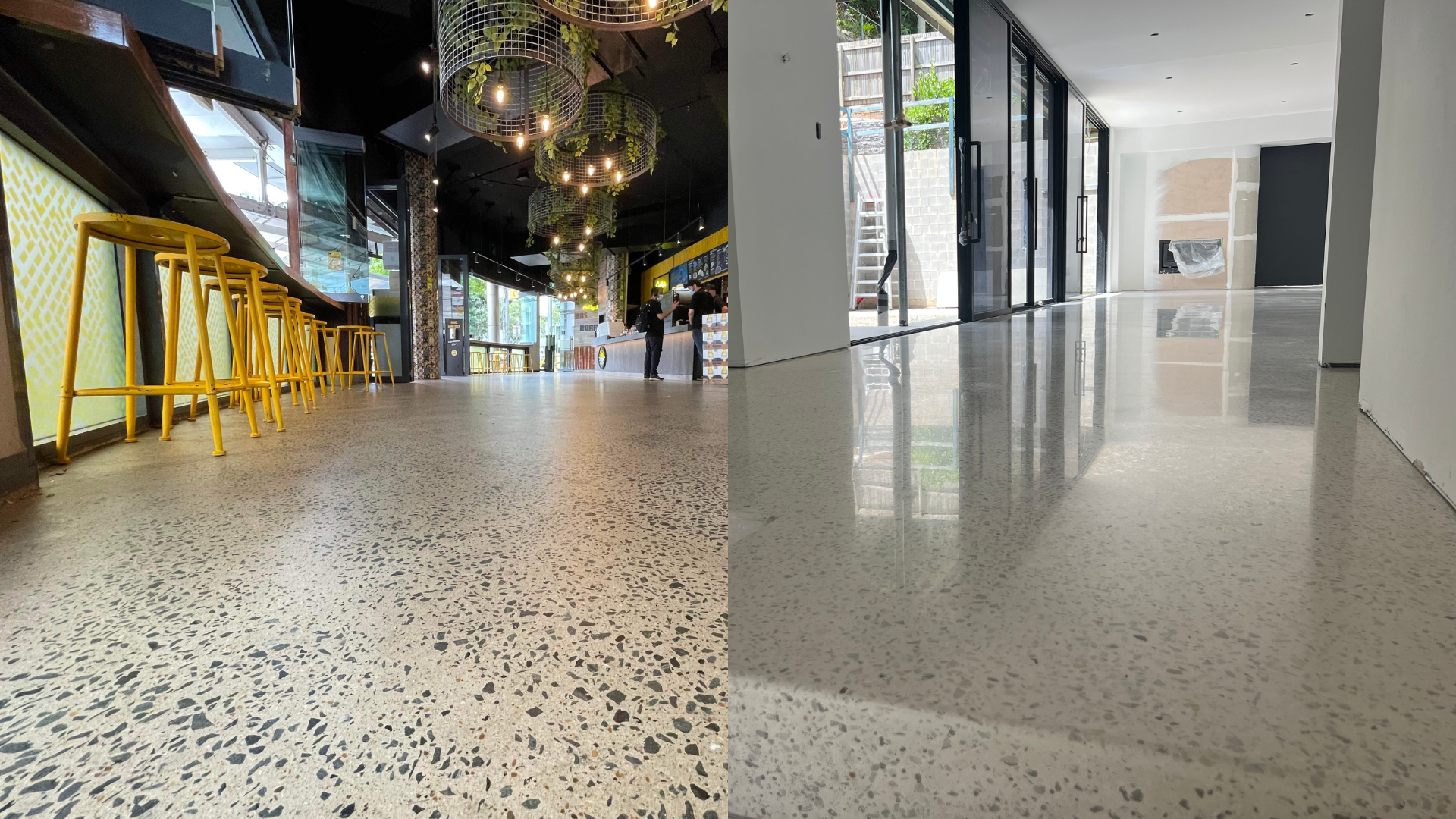
Walk across two concrete floors, one honed and one polished, and in a photo they can look almost identical. In person, and underfoot, they behave nothing alike. The terms get used interchangeably, which is exactly why so many people end up unsure what they are actually paying for.
The honed vs polished concrete question really comes down to one thing: how each floor is finished after it has been ground. That single difference flows through to the look, the grip, the upkeep and the cost.
Here is what separates the two, and how to tell which finish is right for your space.
What Is the Difference Between Honed and Polished Concrete?
The difference comes down to how each floor is finished after it has been ground. Honed concrete is taken to a matte or low-sheen surface and protected with a sealer that sits on top. Polished concrete is hardened with densifiers and refined further until the slab itself carries a satin to high-gloss shine. In practice, honed grips better underfoot and reads softer, while polished is brighter and more reflective.
Allure Concrete Solutions, a QBCC-licensed, family-owned concrete flooring specialist across South East Queensland, installs both finishes and matches each one to how a space will actually be used. For the complete rundown on the honed side, see
The complete guide to honed concrete floors.
They Start the Same Way: The Shared Process
Before they diverge, both finishes follow the same path. A cured slab is ground with a sequence of diamond tooling, moving from coarse to fine, until the surface is smooth and even.
Both finishes also let you decide how much stone shows through. That choice, known as aggregate exposure, runs from none through to medium stone and full stone, and it is set during grinding. It is a separate decision from whether you hone or polish, and it applies to both finishes equally. The grinding stage and exposure options are covered in more detail in
What is honed concrete? Process, finishes and stone exposure explained.
How Each Finish Is Made (The Real Difference)
The two finishes are identical up to the point of the initial grind. What happens next is where they part ways.
Honed Concrete (Grind & Seal)

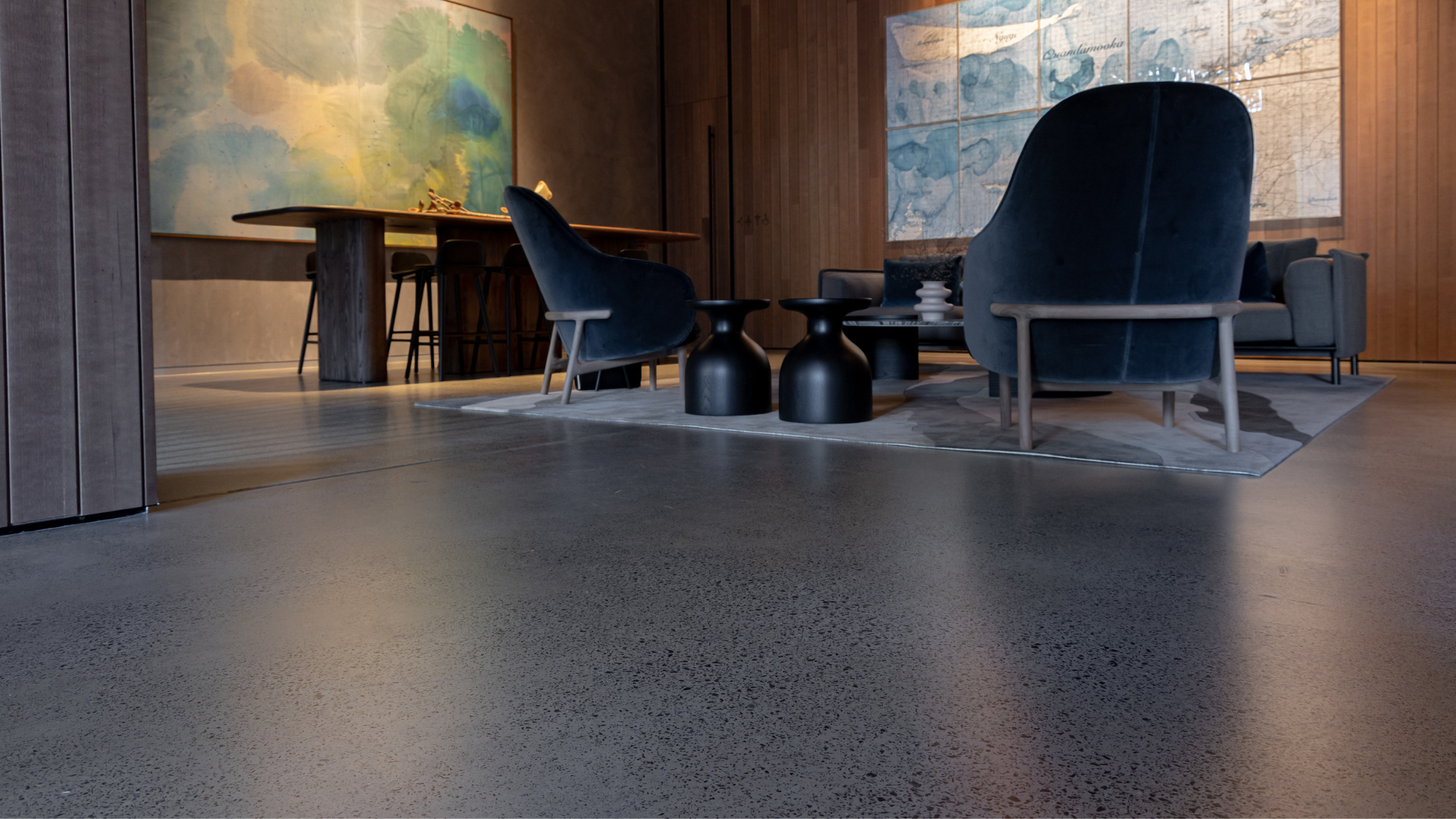
Once the grind reaches the chosen smoothness and stone exposure, the surface is protected with a topical sealer. The shine you see comes from that sealer sitting on top of the concrete, not from the concrete itself, giving a matte-to-satin surface with a little texture and a softer, lower-glare look.
This approach is often called grind and seal, and it is the finishing process behind ACS's honed concrete work. Where extra grip is needed, a non-slip additive can be worked into the sealer.
Polished Concrete (Mechanically Polished)
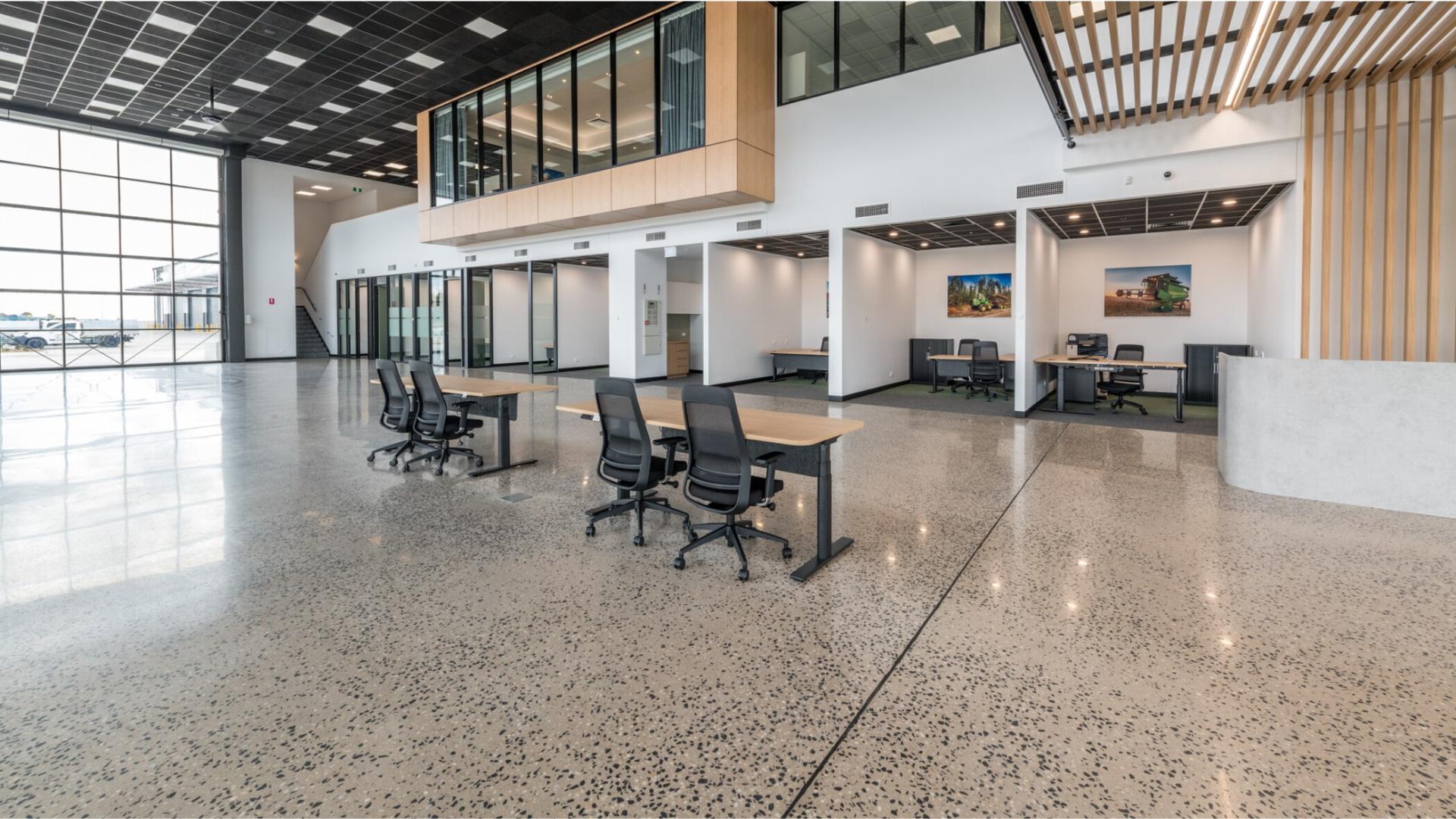
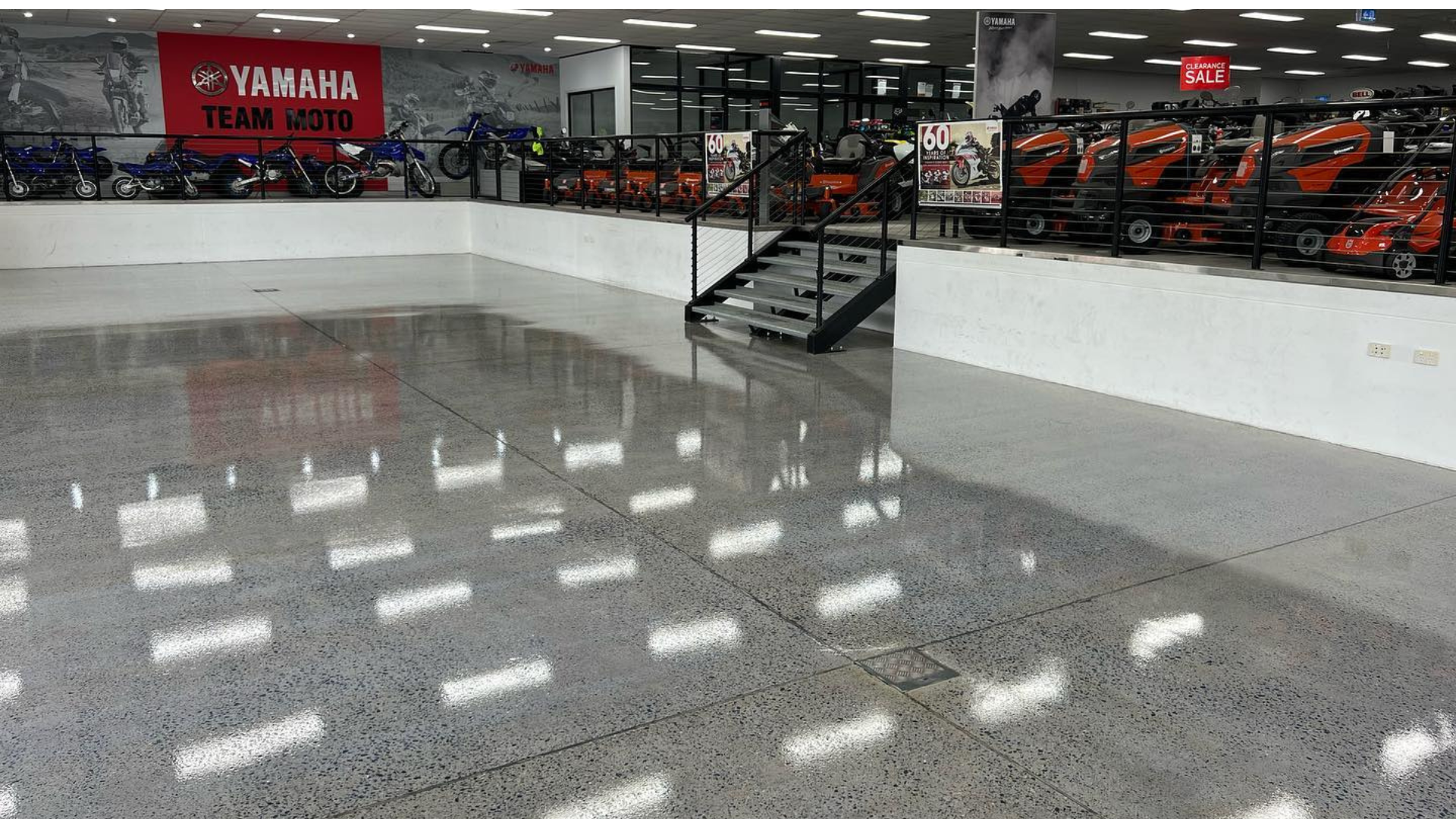
Polished concrete, which ACS refers to as mechanically polished concrete, takes the process further. After grinding, the slab is grouted, treated with densifiers that harden the surface, then refined through progressively finer resin diamonds until it takes on a satin to high-gloss shine. No coating creates that look. The polished surface is the finish, and the densified slab is what gives it its brighter, more reflective character.
Honed vs Polished Concrete: Side-by-Side Comparison
Laid out side by side, the trade-offs between the two finishes are easy to see.
| Feature | Honed concrete | Polished concrete |
|---|---|---|
| How the finish is created | Ground, then sealed with a topical sealer (grind and seal) | Ground, densified and mechanically polished; the slab surface shines |
| Sheen | Matte to satin, lower glare | Satin to high gloss, reflective |
| Texture and grip | Slightly textured, better grip | Smoother, can be slippery when wet |
| Stone exposure options | None, medium stone or full stone | None, medium stone or full stone |
| Maintenance | Periodic resealing of the topical sealer | Lower upkeep, no reseal cycle |
| Upfront cost | Generally lower | Generally higher |
| Lifetime cost | Resealing adds to long-term cost | Fewer recurring costs once installed |
| Best suited to | Lower-glare interiors, areas needing more grip | Bright, high-traffic interiors where reflectivity suits the space |
The short version: honed trades a little shine for more grip and a softer look, while polished trades some grip for brightness and a low-maintenance surface.
Appearance, Sheen & Glare
Side by side, the clearest visual difference is sheen. A honed floor has a calmer, matte look that softens reflections and hides minor marks well. A polished floor is brighter and more reflective, and it lifts the natural and feature lighting around it.
For commercial fit-outs, matte and gloss finishes are a real design decision, not just a preference. Under large glazing and downlights, a high-gloss floor can throw glare that distracts from the space or the product on display. A lower-sheen honed floor avoids that, while polished delivers the brightness many showrooms want. Stone exposure adds another variable, since a full stone honed floor and a full stone polished floor can still look very different.
Durability, Maintenance & Resealing Compared
Both honed and polished concrete floors are hard-wearing in the right setting, so the real question is less about which is tougher and more about how each is maintained.
A honed floor's sealer wears with foot traffic over time, so it needs sanding back and recoating periodically. As a rough guide, ACS suggests a maintenance coat every four to five years, sooner for busier floors. Polished works differently: the densified surface is the wearing layer, so there is no coating to renew. Day-to-day care is usually just a pH-neutral cleaner with a mop, or an auto-scrubber across larger areas.
Resealing schedules and ongoing care are covered in
How to maintain and reseal honed concrete floors.
Slip Resistance & the Indoor / Outdoor Question
Grip is where the two finishes separate most clearly. A honed floor, with its lower sheen and slight texture, generally holds better underfoot than a high-gloss polished floor, especially when wet.
In Australia, slip resistance is measured under AS 4586, which grades surfaces on a P rating scale. Higher numbers mean more grip, and the rating that matters depends on the setting: a dry office foyer has very different needs to an entry that catches rain or a food preparation area. Where the environment calls for it, a non-slip additive can lift a honed floor's rating.
One common myth is worth clearing up: honed concrete is not an outdoor-only finish. It works well indoors wherever a softer look or extra grip suits the space, while polished is generally kept to dry interiors because of its lower grip when wet. For commercial sites, honed also holds up well on covered walkways, large building entries and other exterior areas at scale, which is exactly the kind of work
Allure Concrete Solutions takes on. Slip ratings and non-slip options are covered in depth in our post:
Is honed concrete slippery? Slip ratings and non-slip options explained.
Cost: What Drives the Difference
Cost is usually part of the decision, so it helps to understand what drives the price rather than chasing a single rate per square metre, which varies too much to be useful on its own. Honed concrete is typically cheaper to install, since the sealing step replaces the densifying and fine polishing stages and involves less labour and machinery. The catch is resealing over its life, which adds to the long-term cost. Polished concrete usually costs more upfront but avoids that recurring reseal cycle, which can make it the more economical choice over a long service life.
Beyond the finish itself, the same handful of factors shape the cost of either option: floor area, slab condition and how much prep it needs, the stone exposure you choose, the sealer or system specified, and how easy the site is to access. What drives the price is covered further in
How much does honed concrete cost? What drives the price.
Which Finish Suits Your Space?
When it comes to honed polished concrete floors, there is rarely a single winner. The right finish depends on how the space is used, how it is lit, and how much grip you need underfoot.
A simple way to narrow it down:
- Lean towards honed for a calmer matte look, lower glare, or more grip underfoot.
- Lean towards polished for maximum brightness, a reflective finish, and minimal ongoing upkeep in a dry interior.
In practice, showrooms and retail floors often suit the brightness of polished, offices and hospitality spaces may prefer the lower glare of honed, and warehouses come down to traffic and how the floor will be maintained. None of these is a hard rule. They are starting points for a conversation about the specific site.
P5 retail/office pillar Because ACS installs both finishes, the choice is genuinely about fit rather than what is on offer.
Conclusion
Both finishes share a starting point, but they part ways at the finish, and that shapes the look, the grip, the upkeep and the cost of the floor you end up with. Neither is better in the abstract. The right one depends on how the space will be used and lit.
If you are weighing up the right finish for a commercial space of 100m² or more, the team at Allure Concrete Solutions can talk through what suits your slab and how it will be used. You can see more about our honed concrete work, or our
mechanically polished concrete service, for detail on each finish.
Key Takeaways
- Honed and polished concrete both start as a mechanically ground slab; the difference is what happens after the grind.
- Honed is protected with a topical sealer for a matte, lower-glare finish; polished is densified and refined so the slab itself shines.
- Honed grips better when wet, which is why polished is generally kept to dry interiors.
- Honed usually costs less to install but needs periodic resealing; polished costs more upfront and is lower maintenance over its life.
- Stone exposure, from none to medium stone to full stone, is a separate choice and applies to both finishes.
- The right finish depends on use, lighting and grip, not on one being universally better.
Frequently Asked Questions
What is the main difference between honed and polished concrete?
The main difference is how the surface is finished after grinding. Honed is sealed with a topical sealer for a matte to satin finish, while polished is densified and refined until the slab itself shines. Both start from the same grinding process.
Is honed or polished concrete more slip-resistant?
Honed generally offers more grip, thanks to its lower sheen and slight texture, and a non-slip additive can raise it further. Polished is smoother and can be slippery when wet, which is why it is best kept to dry interiors.
How often does honed concrete need to be resealed?
Because honed relies on a topical sealer, that layer is periodically sanded back and recoated. As a general guide, ACS suggests a maintenance coat every four to five years, sooner in higher-traffic areas. Think of it as ongoing care rather than a fixed rule.
Does polished concrete need sealing?
Polished concrete is densified rather than topically sealed, so it does not follow the same reseal cycle as honed. Day to day, it is lower maintenance, usually just a pH-neutral cleaner and a mop, or an auto-scrubber in larger spaces.
Which is cheaper, honed or polished concrete?
Honed is usually cheaper to install because it skips the densifying and fine polishing stages, but resealing adds to its long-term cost. Polished costs more upfront and avoids that reseal cycle. The final figure depends on floor area, slab condition, stone exposure and site access.
Can honed concrete be used indoors?
Yes. Honed is commonly used indoors wherever a softer, lower-glare look or a bit more grip suits the space. It is not an outdoor-only finish, despite how often it is described that way.
Can you pressure wash honed or polished concrete?
General cleaning is best done with a pH-neutral cleaner. High-pressure cleaning is not recommended on a sealed finish, as it can damage the sealer over time. Regular sweeping and mopping keep both finishes looking their best.
Is honed concrete the same as burnished concrete?
No. Burnished concrete is mechanically refined to a polished surface without stone exposure, then polished to the desired gloss level, which tightens the surface and reduces dusting. Honed and polished concrete, by contrast, both allow for a chosen level of stone exposure. All three are different finishes suited to different jobs.
Does stone exposure differ between honed and polished?
No. Stone exposure, from none to medium stone to full stone, is chosen separately during grinding and is available in both finishes. It changes the look independently of whether the floor is honed or polished.
Which finish is better for a commercial space?
It depends on use and lighting. Polished suits bright, high-traffic interiors and showrooms, while honed suits lower-glare interiors or areas where more grip is wanted. Both are durable in the right application, so the decision comes down to fit.

Ready to Take Your Polished Concrete Floor Project to the Next Level?
We’ll help you choose the right system and finish for your space without compromising on results.
Trusted by builders, project teams, and businesses
As polished concrete contractors in Brisbane, we’re relied on by professionals who need dependable scheduling, consistent quality, and clear communication. Every job is completed by our own experienced team, so you deal directly with us from start to finish.