Honed Concrete vs Exposed Aggregate: Which Suits Your Project?

Two concrete finishes can look almost identical in a photo, yet behave nothing alike underfoot. One is smooth and modern, the other textured and rugged, and choosing between them is one of the most common decisions people face when they want to show off the stone in their concrete rather than cover it up.
That is the real question at the heart of honed concrete vs exposed aggregate. It comes down to how each finish is made, how it feels to walk on, how it handles wet weather, and where it genuinely belongs. Get it right, and the floor works for the space for decades. Get it wrong, and you are living with the wrong texture in the wrong spot.
What Is the Difference Between Honed Concrete & Exposed Aggregate?
Both finishes reveal the stone in the concrete, but they are made in completely different ways and suit different spaces. Exposed aggregate is formed while the slab is still wet, washed back or seeded to leave a textured, grippy finish used mostly outdoors. Honed concrete is a cured slab mechanically ground flat and sealed to a smooth, low-sheen surface, at home indoors and in refined outdoor areas.
The short version on choosing: exposed aggregate wins on grip for driveways and wet outdoor areas, while honed wins where you want a smooth, modern, easy-to-clean floor. Allure Concrete Solutions, a Brisbane-based honed concrete specialist working on commercial projects across South East Queensland, gets asked to settle this exact question all the time, and the answer almost always comes back to how the space will be used.
What Is Honed Concrete?

Honed concrete is made by mechanically grinding a cured concrete slab with progressively finer diamond tooling, then sealing it to protect and finish the surface. It is a grind-and-seal process rather than a coating poured on top, which is what gives it that smooth, low-sheen character. How much stone shows through is a choice, from none through to medium stone or full stone, set by how far the surface is ground.
It sits close to mechanically polished concrete, though the two are not the same finish, since polishing is taken further to a higher gloss. If you want the full comparison, Honed vs polished concrete: what is the difference? covers it in detail.
For a closer look at the honed process itself, our
honed concrete flooring page walks through it step by step, backed by
The Complete Guide to Honed Concrete Floors,
What is honed concrete? Process, finishes and stone exposure explained for the finer detail on finishes and stone exposure.
What Is Exposed Aggregate?
Exposed aggregate is one of the most recognisable decorative concrete finishes in the country, and it is made in a completely different way to honed concrete. While the slab is still fresh, the top layer of cement paste is washed or brushed away, or decorative stone is seeded into the surface, to reveal the pebbled texture underneath.
The key point is timing: exposed aggregate is created at the pour, as the slab goes down, not applied to a slab that has already cured. That single fact shapes almost everything else about choosing between the two.
How Each Finish Is Made (& Why It Matters for Your Project)
The way each finish is created decides who you call and when. Exposed aggregate is a pour decision, specified with the concreter laying your slab while the concrete is still wet, whereas honed concrete is applied to a slab that has already cured, whether a new slab once hardened or an existing one you want to refine.
This is also where a common mix-up creeps in. A honed finish can be ground over an exposed aggregate slab to smooth it back, and the result is sometimes called honed exposed aggregate concrete. It is why the two terms get tangled together, even though they describe different stages of the work.
Allure Concrete Solutions specialises in honing and sealing cured slabs and does not pour new concrete, so exposed aggregate laid at the pour sits outside what the team installs.
Honed Concrete vs Exposed Aggregate at a Glance
Here's how the two finishes compare across the things that matter most.
| Honed concrete | Exposed aggregate | |
|---|---|---|
| How it is made | Cured slab ground flat and sealed | Formed at the pour, surface washed back or seeded |
| Texture & feel | Smooth, matte, comfortable underfoot | Textured, pebbled, can be harsh on bare feet |
| Slip profile | Smoother, made safe with a slip-resistant sealer | Naturally grippy from its texture |
| Best suited to | Interiors and refined outdoor zones | Driveways, ramps, pool surrounds, wet outdoor areas |
| Maintenance | Easy to clean, periodic resealing | Low fuss, periodic resealing |
Appearance & Feel Underfoot
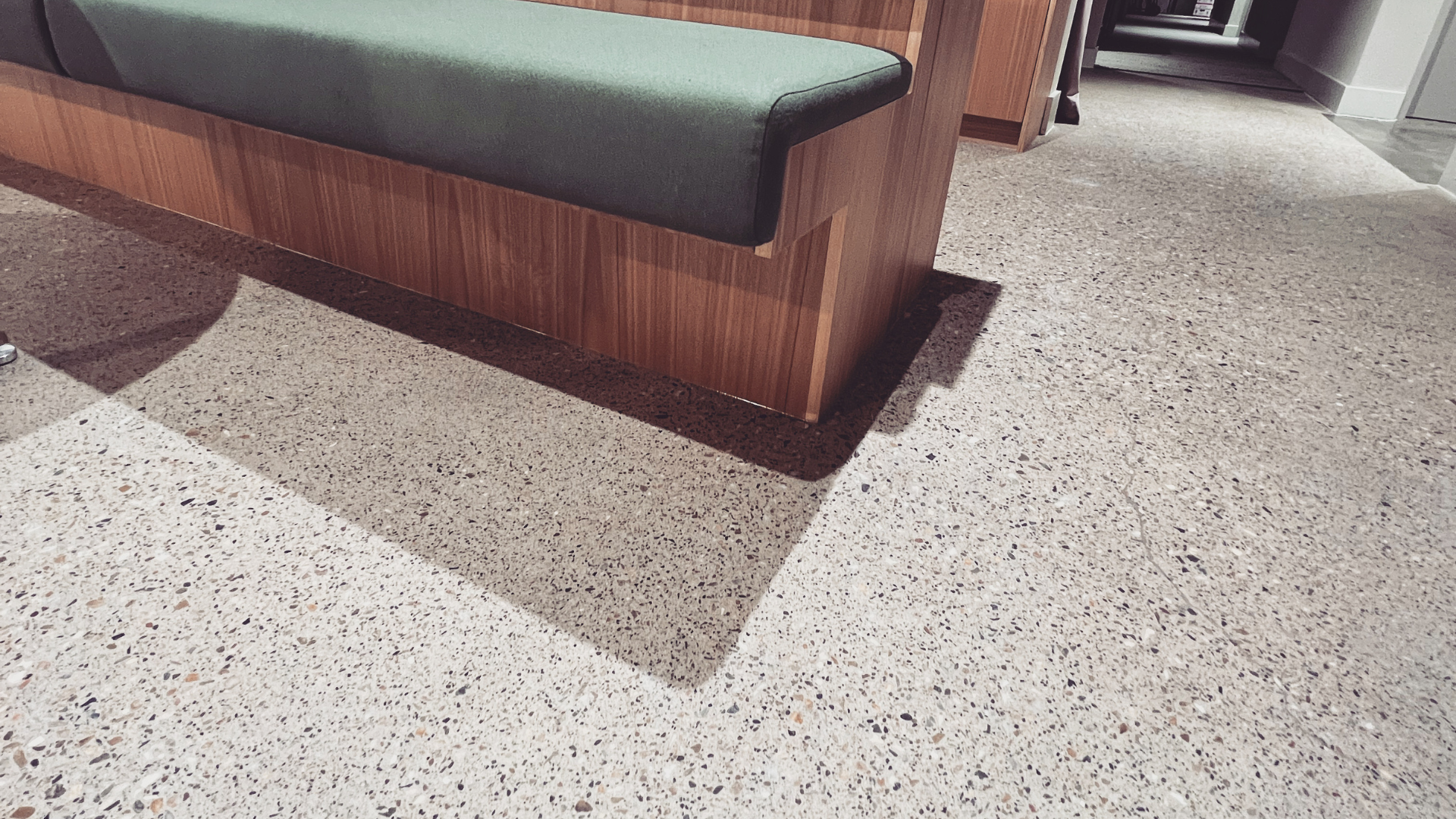
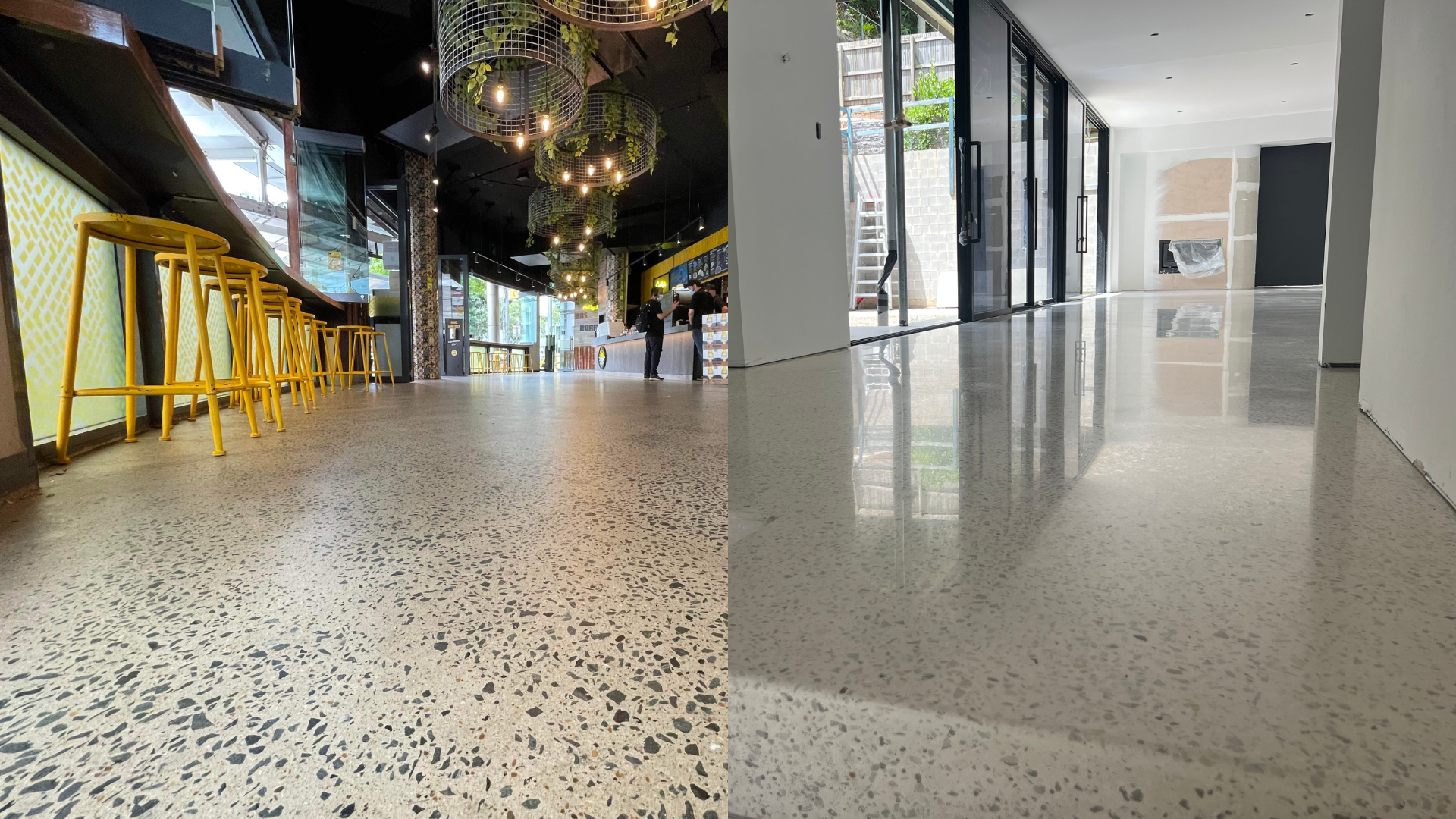
Honed concrete reads as calm and contemporary. It is a matte concrete finish that feels smooth and comfortable underfoot, gentle enough for bare feet, which is part of why it suits modern interiors and refined outdoor zones like alfresco areas.
Exposed aggregate is the opposite: textured, pebbled and rugged, with plenty of visual movement, a feature outdoors, though the same texture can feel harsh on bare feet and knees.
Both finishes show off the stone in the concrete, the difference being whether it is left raised and textured, as with exposed aggregate, or ground back flat, as with honed. The degree of aggregate exposure, along with the colour of the stone and cement, shapes the final look. If you want to explore the options in more depth,
Honed concrete colours and finishes: what affects the final look
covers the full range.
Slip Resistance & Safety
Slip resistance is where this decision gets real, especially anywhere that gets wet. In Australia, slip resistance is classified under AS 4586 using the wet pendulum test, producing a rating from P1 to P5. The higher the number, the more grip the surface offers when wet, and the National Construction Code and its supporting handbook set out which ratings suit which areas.
Exposed aggregate has natural grip built into its texture, which is exactly why it is a default choice for driveways, ramps and wet outdoor areas. Honed concrete is smoother and, left untreated, can become slippery when wet. The fix is a slip-resistant sealer, or a fine grit additive worked into the sealer, which lifts the surface to a safe rating for the area it needs to serve, including around pools and in other wet zones.
Landscapers will often steer clients straight to exposed aggregate over slip worries, but a correctly specified non-slip finish makes honed a genuine, more comfortable option. For a closer look at how those ratings work and which non-slip options suit which spaces,
Is honed concrete slippery? Slip ratings and non-slip options explained
breaks it down in full.
Durability & Maintenance
Both finishes are built to last. Exposed aggregate's texture hides wear and marks well and shrugs off heavy traffic, while honed concrete is hard-wearing too and, being smooth and sealed, far easier to sweep, mop and keep clean day to day.
Maintenance is where honed asks a little more. Its sealer needs refreshing periodically, broadly every few years depending on traffic and wear rather than a fixed schedule, with a maintenance coat applied as needed, which is why a good installer hands over a care guide covering exactly this. Exposed aggregate also benefits from periodic resealing to hold its colour and surface.
A sealed honed surface should be cleaned gently rather than pressure washed, while exposed aggregate handles a hose or pressure wash more comfortably. For the full care routine,
How to maintain and reseal honed concrete floors
walks through it step by step.
Cost: What Drives the Difference
Honed concrete generally costs more than exposed aggregate, since honing adds grinding and sealing stages and specialised machinery, whereas exposed aggregate is finished in place as the slab is poured.
Rather than a single rate, price moves with the size of the area, the level of stone exposure, sealer type, slab condition and prep, and site access. Commercial honed work also carries a minimum project size, with a 100m² floor area the practical starting point.
For a fuller breakdown of what shapes the number,
How much does honed concrete cost? What drives the price" covers the full picture.
Which Finish Suits Your Project?
So which one belongs in your space? It comes down to where the floor is, how much grip it needs, and the look you want.
Lean towards exposed aggregate outdoors, where grip is the priority: driveways, ramps, pool surrounds and sloped or wet areas, especially when a new slab is going down, and the texture can be built in at the pour.
Lean towards honed concrete indoors or in a refined outdoor zone, where a smooth, easy-to-clean surface matters more than raw grip, and the slab has already cured. If exposed aggregate is what you want, that's a conversation for the concreter pouring your slab.
Conclusion
Choosing between these two finishes comes down to how the space is used, not which one is better. If you are planning a commercial project across Brisbane, the Gold Coast or the Sunshine Coast and a honed finish is the direction you are leaning, the Allure Concrete Solutions team is happy to talk it through. You can also browse recent completed projects to see the finish in real spaces.
Key Takeaways
- Both finishes reveal the stone in concrete, but exposed aggregate is formed at the pour while honed concrete is ground and sealed on a cured slab.
- Exposed aggregate is textured and naturally grippy, which makes it the go-to for driveways and wet outdoor areas.
- Honed concrete is smooth, matte and easy to clean, best suited to interiors and refined outdoor zones.
- Honed can be made slip-safe with a slip-resistant sealer, rated against the AS 4586 wet pendulum scale.
- Honed generally costs more than exposed aggregate because it adds grinding and sealing stages.
- Allure Concrete Solutions hones and seals cured slabs and does not pour concrete, so exposed aggregate is a decision made with your concreter at the pour.
Frequently Asked Questions
What is the difference between honed concrete and exposed aggregate?
Both reveal the stone in concrete, but exposed aggregate is textured and created at the pour, while honed concrete is ground flat and sealed on a cured slab, giving one grippy outdoor finish and one smooth finish suited to interiors.
Is honed concrete more expensive than exposed aggregate?
Generally yes, since honing adds grinding and sealing stages and specialised machinery that exposed aggregate, finished as the slab is poured, does not need.
Which is better for a driveway?
Exposed aggregate is usually the stronger choice, since its texture gives natural grip for vehicles and foot traffic in all weather.
Can honed concrete be used around a pool?
Yes, a slip-resistant sealer or fine grit additive lifts the surface to a safe wet slip rating for bare feet, making honed a comfortable option around pools.
Is honed concrete slippery when wet?
It can be if left untreated, since the surface is smooth. A non-slip sealer specified for wet or outdoor areas solves this, with slip performance measured against the AS 4586 ratings.
Can you hone an existing exposed aggregate slab?
Yes. A honed finish can be ground over an exposed aggregate surface to smooth it back, creating what is sometimes called honed exposed aggregate concrete. This overlap is part of why the two terms are so often confused.
How often does honed concrete need resealing?
It varies with traffic and wear rather than a fixed interval, broadly every few years, with a maintenance coat applied as needed. Your care guide, handed over on completion, spells out the timing for your specific floor.
Can you pressure wash honed concrete?
Gentle cleaning is best: high pressure is not recommended on a sealed honed surface, so stick to low pressure or a mop. Exposed aggregate tolerates a hose or pressure wash more readily.
Is honed concrete hot to walk on?
Its matte surface stays cooler underfoot than a high gloss finish, and lighter aggregate and cement colours reduce how much heat the floor absorbs.
Does Allure Concrete Solutions install exposed aggregate?
No. Allure Concrete Solutions specialises in honing and sealing cured slabs and does not pour new concrete, so exposed aggregate is arranged with the concreter laying your slab.
Ready to Take Your Polished Concrete Floor Project to the Next Level?
We’ll help you choose the right system and finish for your space without compromising on results.
Trusted by builders, project teams, and businesses
As polished concrete contractors in Brisbane, we’re relied on by professionals who need dependable scheduling, consistent quality, and clear communication. Every job is completed by our own experienced team, so you deal directly with us from start to finish.